
Timeless Love and Intellectual Passion: The Enduring Romance of Abelard and Heloise
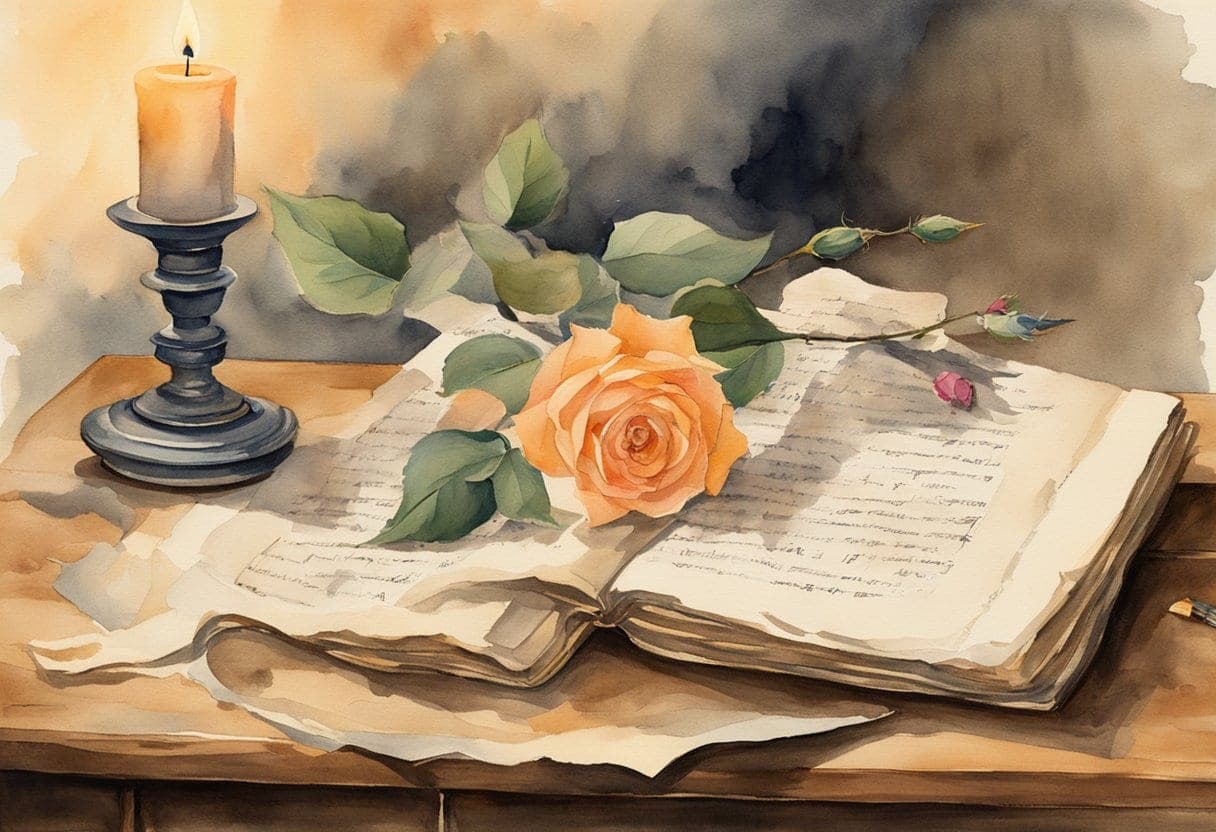
In these letters, Abelard and Heloise share their thoughts and emotions in a way that transcends time.
Their words reveal not only the depth of their connection but also the challenges they faced.
As you explore their story, you may find yourself drawn into the drama, passion, and enduring appeal of their medieval romance.
"True love can never be constrained." - Heloise
Heloise was right, wasn't she? Love, in its purest form, defies logic.
It breaks free from the chains.
During medieval times, the world was different. Relationships faced many obstacles.
Family pressure, social expectations - they all tried to confine love.
But Heloise and Abelard’s love was rare. It shattered every boundary.
In their letters, they discussed philosophy and emotions.
These letters showed how strong their bond was.
They connected beyond the usual limits. It was about soul and spirit.
Picture love as a river. It flows, unstoppable by mere rocks.
No wall could truly hold it back. Just like Heloise’s love for Abelard. It found its own path.
People today might wonder if such love still exists. Can we connect like this in modern times?
Heloise inspires us to look beyond obstacles.
She taught that genuine love finds ways to shine through.
Think about that for a moment. Aren’t the challenges worth it, if you discover such deep connection?
This idea can inspire new paths for us all.
Her story suggests love isn't just an emotion. It's a force.
It pushes through barriers, daring us to follow. She showed us love’s true nature. Isn't that intriguing?
"Where there is love, there is jealousy." - Abelard

Abelard famously said, "Where there is love, there is jealousy."
Imagine this: you're deeply in love. Everything seems perfect. But then comes a hint of jealousy. It's like a shadow lurking behind every loving glance.
Jealousy isn’t always negative. It can mean you care deeply.
Abelard and Heloise experienced this. Their letters reveal feelings of deep love but also jealousy. Each worried about the other's affection slipping away.
Think about a treasured photograph.
Preserved carefully, it shows a moment of love. But if the picture fades, you're reminded of what's been lost, just like jealousy can remind one of love's preciousness.
Jealousy sometimes pushes couples to strengthen their bonds.
Can jealousy keep love alive?
Reading Abelard’s words, you might think so. They show how deep his feelings were.
Dr. Whitman often says that jealousy can be like salt in a dish. A pinch enhances, but too much spoils everything.
Abelard’s insight invites us to ponder how love and jealousy often walk hand in hand.
"God knows I wanted to spare you." - Abelard

Imagine a time when messages took weeks to deliver, no instant texts here.
Abelard and Heloise lived in such a world.
They wrote letters filled with deep feelings. Abelard, a teacher, wrote to his beloved, Heloise.
He expressed his wish to protect her from life's harsh realities.
He wanted to shield her from pain.
Abelard's words, "God knows I wanted to spare you," show his deep love and care.
This phrase captures a key moment. It's an emotional snapshot of his desire.
It's not always easy to protect someone you love.
Think about the risk Abelard took.
The couple’s romance was secret and forbidden. They faced many challenges, and fate wasn’t kind.
Yet, through their letters, they connected in ways words today often lack.
Can you feel the power of that connection?
She tried to protect him too.
In the middle of medieval chaos, their love letters showed a timeless bond.
We could learn a thing or two from their dedication and bravery.
What would you do to spare someone you cherish? Abelard’s words remind us how far love can go.
"To restore you to a state of security, I suffer in silence." - Heloise

Heloise's words reveal a deep sense of selflessness.
How often do we choose to keep our struggles hidden to protect someone we love?
Heloise's letters to Abelard show this quiet dedication. She put his peace before her own.
In medieval times, expressing love could be risky. For Heloise, this meant keeping her pain private.
It's a reminder of how love often asks us to be selfless.
The words she wrote still resonate, showing the timeless nature of sacrificing for love.
Imagine being Dr. Laura Whitman, who admires Heloise's strength.
Dr. Whitman might say that Heloise's silence was not weakness. Instead, it was a powerful act of devotion.
This idea of silent sacrifice might feel very relatable even today.
In those letters, Heloise might be speaking directly to us.
Do you hear her? Can you feel her silent struggle as she penned each letter?
The emotional weight of her choice binds time and sentiment together, remaining relevant and profound.
5) "The things that I once did with you arouse hatred." - Abelard

Abelard. What a character! This quote speaks volumes. It seems he regrets some choices.
Imagine two people deeply in love. Their letters were filled with passion. Then, things changed.
Isn't it shocking how love can turn into bitterness?
Heloise loved Abelard with all her heart. Their bond was once unshakable.
How does resentment grow from such a strong bond? This situation makes you wonder about the nature of love.
Picture the medieval times. Love was fiery and intense but could be equally tempestuous.
Sometimes, choices lead to guilt or regret. That's part of being human, right?
Abelard and Heloise were no different. Their story reminds us of the impact our actions can have.
Love letters? They're like footprints of a relationship's journey.
They reveal moments of joy, pain, and growth. As time passes, feelings evolve.
What was once cherished can become a source of pain. Would Abelard's writings have the same effect today?
"When love is once gained, it cannot be easily relinquished." - Heloise

Heloise had a way with words. Her letters to Abelard were filled with passion. But what did she mean by this phrase?
Think of love as a rare treasure. Once found, it's hard to let go. People hold on, even when times are tough.
Can you imagine giving up something so precious?
This is the power of Heloise's message. When two people connect deeply, it's hard to walk away. Love's grip is strong. Even distance or challenges often can't break it.
Dr. Laura Whitman often talked about this unyielding love.
Friends once noticed how she'd cling to old photographs, memories too dear to release.
“It's the same with love,” she would say, pondering a timeless answer to Heloise's sentiment.
This connection, rooted in medieval romance, speaks to everyone.
Whether a grandparent looking back or someone in young love, the truth holds. Once you've experienced real love, parting with it feels impossible.
How does love endure against the tides of time?
Heloise hints at answers, suggesting a bond so deep that nothing severed it easily. It's a testament to love's strength and mysterious nature.
"I came to love you with my soul." - Abelard

Imagine falling in love with such depth that it bypasses mere attraction, straight to the soul. Abelard's statement does just that. He and Heloise shared a connection far beyond what most can dream of.
Why is this connection so powerful? It transcends the physical, rooting itself in something deeper.
Their love lived through letters filled with passion and raw honesty.
These letters weren't just casual notes. They were the heart and soul of a vibrant romance.
Reflecting on Abelard’s words, one can almost feel the weight of his devotion.
It wasn't just a romantic ideal but an essential part of his being.
This emotion, written centuries ago, still resonates with those seeking a love that touches the core of their existence.
These words remind us of the true essence of love.
It's not about grand gestures or perfect looks. It's about that deep, soulful connection that endures.
Can anyone truly love like this today?
Abelard and Heloise prove it's possible. Their story remains a beacon of hope for those searching for a love that truly lasts.
8) "To be loved by you alone, I strayed." - Heloise

Can you imagine a love so strong that it blinds everything else? Heloise's words resonate with such passion and intensity.
She reflects on choices and consequences driven by love.
Heloise was deeply in love with Abelard. Their relationship was full of emotion and longing.
These are not just words; they’re the voice of a heart yearning for connection.
Listen closely to her plea.
She stepped away from security and normal life for love. This choice was profound and full of bravery.
Her story makes us ask: What are we willing to risk for love?
Reading Heloise's letters feels like stepping into an intense romance. Her devotion is both touching and tragic.
You can feel her struggle between personal desires and societal expectations.
Consider how these letters have survived through time.
They give us a window into medieval romance, where love was fierce and sometimes, all-consuming.
Can we find lessons today in their story? Absolutely.
They remind us that love can inspire us to break boundaries.
"Love, which shall burn until I die." - Abelard
When Abelard wrote of a love burning until death, he tapped into something universal. Who hasn’t felt, even briefly, that kind of passion?
Imagine, if you will, the heartache of letters exchanged through centuries, the ink still whispering secret vows.
Abelard's words ignited a blaze that we still feel today.
Abelard and Heloise's love has fascinated people for generations.
Their letters are more than just words on old parchment. They’re a window into the past, full of raw emotion that many of us can relate to.
Imagine Abelard, a scholar and philosopher, weaving words filled with longing and desire.
His letters to Heloise paint a picture of deep devotion.
What makes this more amazing is that they lived hundreds of years ago. Yet, emotions like these are timeless, aren't they?
Let’s not forget Heloise. Her responses were just as passionate.
Her words were filled with both love and questions about the nature of their relationship.
Through their letters, they explored these feelings deeply, giving us a glimpse into medieval romance.
10) "I lost my lord, I lost my lover, I lost my friend." - Heloise
The story of Heloise and Abelard is a tale of love and loss. Heloise's words, "I lost my lord, I lost my lover, I lost my friend," echo the pain of separation.
Think of a time when a friend moved away. That feeling is much like what Heloise felt.
Her words show how all these roles were one person to her, embodying the emotional depth of a lost connection.
In the medieval world, such deep expressions of personal love were rare in letters.
Heloise’s writings reveal the complexity of human emotion long before modern times.
Can you feel the weight of her loss?
It wasn’t just about losing a romantic partner. She mourned losing a companion and a guide, showing how intertwined their lives were.
Her heartfelt confession draws readers into her world.
It’s a personal tale of great love and the heartache of its absence.
This story reminds everyone of the timelessness of love and the inevitable pain that often accompanies it.
Historical Context

The story of Abelard and Heloise unfolds against the backdrop of medieval society, mixing romantic ideals with intense personal drama.
Medieval Society and Romance
Imagine living in a world where love was often dictated by societal norms rather than personal choice.
In the 12th century, Europe was a place where marriages were arranged, often used to build alliances and extend family prestige.
Romantic love was celebrated, but the idea of marrying for love was still quite unusual.
Courtly love, a concept romanticized in songs and stories, allowed knights and noble women to engage in emotional, chaste relationships.
Lovers exchanged tokens or letters, sharing deep feelings within the bounds of societal expectations.
This made intimate exchanges, like those between Abelard and Heloise, both daring and noteworthy for breaking the rules.
Their correspondence highlighted a world balanced between passionate love and strict social constraints, a duality that intrigued many and inspired countless retellings.
Prominent Figures: Abelard and Heloise
Peter Abelard was not just any philosopher. He was a towering intellect in philosophy and theology, known for challenging existing teachings.
Imagine a classroom with Abelard at the helm, stirring controversies and stimulating debates with his sharp mind and words. A bit like a medieval celebrity professor, don't you think?
Heloise was more than a student. She was revered for her intellect as much as her beauty.
Raised by her uncle Fulbert, she became Abelard's pupil and eventually his romantic partner.
Their relationship was a mix of deep love and intellectual partnership.
It took a dark turn after Heloise's uncle disapproved, resulting in Abelard's infamous injury and their separation.
Despite these tragedies, they continued writing passionate letters, leaving a legacy of love that defied time.
The Love Letters
Authorship and Authenticity
Who really penned these letters?
The authenticity of the letters has sparked debates and discussions among scholars for years.
Though traditionally attributed to Peter Abelard and Heloise, some suggest other hands may have influenced them. Could they have been edited or added to later?
These letters reveal intimate details about their writers' lives.
Both Abelard, a respected philosopher, and Heloise, his brilliant student, embarked on a tragic romance.
They exchanged letters after entering monastic life, painting a vivid picture of their emotional struggles.
Given their complex relationship, some argue the letters might reflect broader themes rather than personal revelations.
Whether they were truly written by Abelard and Heloise or later embellished, they remain a bridge to understanding their era's intellectualism.
Themes and Motifs
Diving deeper, the letters blend exploration of human emotions with philosophical inquiry.
Love, one might say, is just the beginning.
They tackle issues like duty, honor, and the sacrifices made for love.
Heloise, renowned for her intelligence, often depicted as a woman challenging societal norms.
Her writings reveal her conflicted feelings between her love for Abelard and her monastic duties. You feel her resignation and passion in her words.
Abelard, too, wrestles with his emotions.
His letters are filled with reflections on the nature of love and the trials of existence.
You can almost hear the longing in his admissions, creating a tapestry of emotion and thought that resonates even today.
Legacy and Influence

The story of Abelard and Heloise has captured the imagination of people for centuries. Their personal letters offer a glimpse into a deep and troubled love that transcends time.
Cultural and Literary Impact
Abelard and Heloise's letters stand as a testament to their passion and intelligence.
These writings have left an indelible mark on literature, frequently compared to stories like Romeo and Juliet.
The letters not only showcase their brilliant minds but also their emotional complexity. They have inspired countless adaptations in books, plays, and movies.
The influence of their story extends beyond just romantic tales.
Their discussions about love, faith, and philosophy have enriched philosophical and theological debates.
It’s fascinating how their voices from the 12th century continue to resonate today, prompting new generations to explore themes of love and tragedy.
Modern Interpretations
Today, their legacy continues to inspire diverse interpretations.
Abelard and Heloise's story often appears in unexpected places.
From modern novels to television series, people find new ways to explore their timeless connection.
They inspire not just through their love, but also through their shared passion for knowledge and discovery.
Some authors and creators use their story as a foundation for exploring gender roles and societal norms.
The tale of two people deeply in love but facing immense challenges brings about discussions that remain relevant.
Their story remains a source of inspiration and contemplation for anyone interested in the complexities of love and intellect.
Frequently Asked Questions

The letters of Abelard and Heloise offer a fascinating glimpse into a world filled with passion, intellect, and turmoil. Their exchanges not only reveal their personal struggles but also highlight broader cultural and philosophical themes of the medieval era.
What is the historical significance of the love letters between Abelard and Heloise?
Abelard and Heloise's letters are major historical documents. They provide insight into medieval thought and the roles of men and women at that time. Their passionate correspondence reveals intimate details about their lives, thoughts, and emotions, making them an important resource for historians.
What are the main themes explored in the correspondence between Abelard and Heloise?
These letters dive into themes like love, sin, guilt, and forgiveness. There are also reflections on fate and God's will. The emotions and tensions felt by Abelard and Heloise help paint a vivid picture of their lives and beliefs.
How did the relationship between Abelard and Heloise influence the philosophical discourse of their time?
Abelard, a noted philosopher, used their relationship to explore ideas of ethics and morality. His views were often controversial and challenged existing norms. Their exchanges became a platform for discussing the complexities of human emotion and intellect.
What were the consequences of Abelard and Heloise's romance in medieval society?
Their romance was not without consequences. Heloise's uncle disapproved strongly, leading to Abelard's castration. Both were forced into religious life. Their letters reflect these personal tragedies and the societal pressures that shaped them.
How does the story of Abelard and Heloise reflect the culture and values of the medieval period?
Abelard and Heloise's story reflects medieval ideals of love, honor, and scholarly pursuit.
Their experiences showcase the complexities of societal expectations and personal desires, highlighting the conflict between worldly passion and spiritual devotion.
What insights into monastic and scholastic life of the 12th century do Abelard and Heloise's letters provide?
Their letters reveal much about monastic disciplines and academic life.
Heloise, as an abbess, discusses religious practices, while Abelard shares his philosophical thoughts.
Their correspondence is a window into the scholarly and religious environments of their time.
Ready to restore your own photos?
Our artists bring your damaged photos back by hand, most within a few days.
Rated 4.96 out of 5 stars.4.96/5 · Loved by 400,000+ families