
Unveiling the Depths: Oscar Wilde’s ‘De Profundis’ and Its Reflection on Love, Betrayal, and Redemption
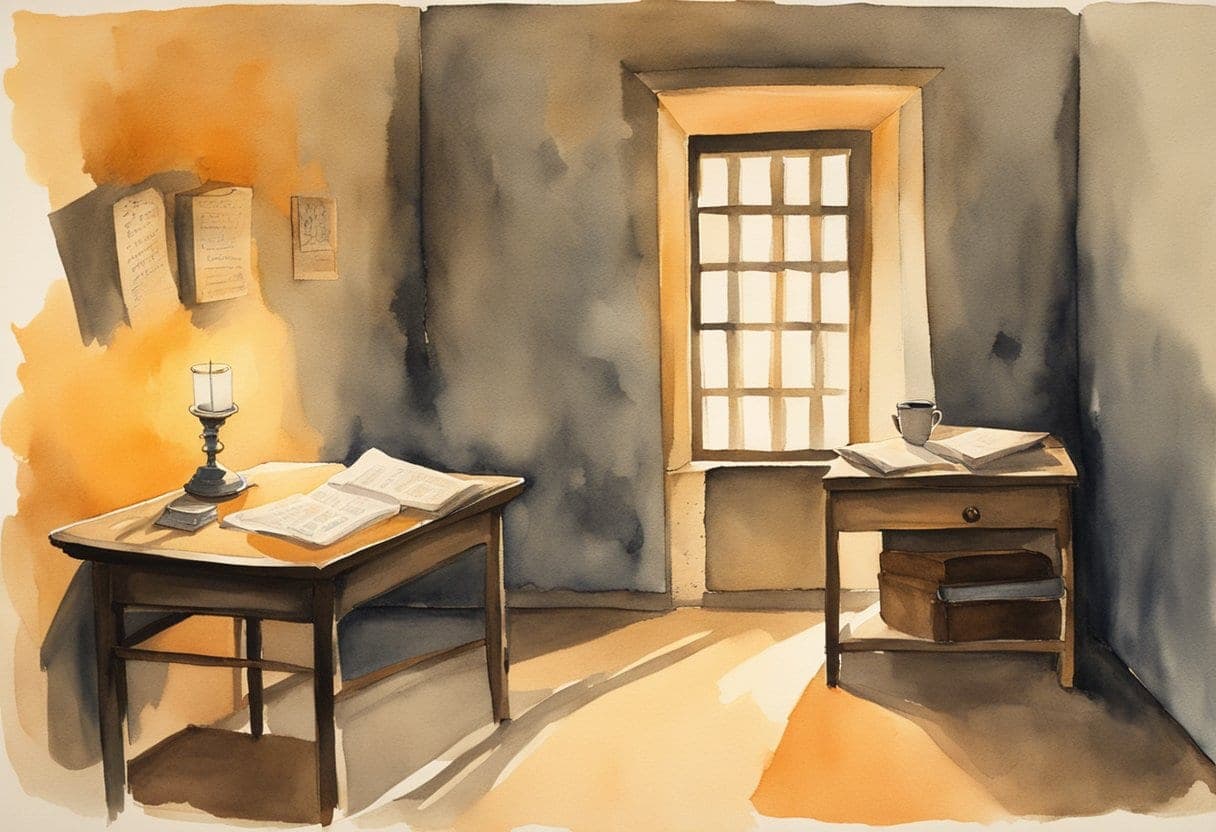
Throughout history, many great writers have penned influential works from behind bars, but Wilde's De Profundis remains a significant example of prison literature.
His relationship with Lord Alfred Douglas and the resulting scandal are key themes in this letter.
Wilde's prison letters not only shed light on his personal journey but also provide poignant observations on human nature and society.
"The gods had given me almost everything." - Oscar Wilde

Oscar Wilde wrote about his feelings and experiences in prison in "De Profundis." He famously began one passage with "The gods had given me almost everything."
This statement reflects the height of his success before his life took a dramatic turn.
He had genius, a brilliant mind that could craft the most entertaining plays and witty remarks.
He also enjoyed the trappings of fame and wealth. Wilde lived as a flâneur and dandy, indulging in a lifestyle of luxury and ease.
But with this success came a downfall.
Wilde admitted that he let himself be drawn into "long spells of senseless and sensual ease." He surrounded himself with small-minded people, which led him away from his true potential.
In his prison letters, Wilde reflects on how he wasted his youth and genius.
He speaks openly about becoming the "spendthrift of his own genius" and realizing this too late.
Wilde's eloquent self-reflection shows his deep regret and a longing to reclaim his artistry and integrity.
2) The autobiographical element in 'De Profundis'

Oscar Wilde's 'De Profundis' is more than just a letter; it’s a deep dive into his own life.
Written during his imprisonment, Wilde uses this time to reflect on his past decisions and relationships.
One of the most striking parts is his recount of the relationship with Lord Alfred Douglas.
Wilde’s words paint a vivid picture of their bond, highlighting both the joy and the sorrow.
He also examines his downfall.
Wilde openly discusses how his lavish lifestyle and poor choices led to his conviction.
This introspection adds a raw, honest touch to the letter that feels almost personal.
In 'De Profundis,' Wilde looks at his spirituality.
Being in prison gave him the time to think about his beliefs. He shares these thoughts openly, offering a window into his mind during one of the darkest periods of his life.
The letter shows Wilde's growth.
He admits his faults and expresses his desire to change.
This transformative aspect is key to 'De Profundis', making it a powerful autobiographical piece.
Reading 'De Profundis', you not only see Wilde the writer but also Wilde the human, flawed and reflective.
It’s a rare, unfiltered glimpse into the heart and mind of an iconic literary figure.
Interested in a closer look? Check out Wilde's reflections in De Profundis and see his journey through his own words.
Wilde's transformation through suffering

Oscar Wilde's time in prison was a period of deep reflection and change.
Can you imagine the scene? Cold, gray walls, the echo of footsteps, the somber atmosphere.
It's within these walls that Wilde began his letter, De Profundis, meaning "from the depths."
At first, Wilde was consumed by bitterness and regret.
He reflected on his relationship with Lord Alfred Douglas and the choices that led him to imprisonment.
Wilde's initial anger and sense of betrayal were overwhelming.
The emotional weight of his experiences is almost palpable. Can you feel it? That deep, wrenching feeling of loss?
As time passed, Wilde's perspective began to evolve.
He started to find a sense of spiritual awakening.
The confines of his cell forced him to look inward, to explore his own soul.
He wrote about this evolving understanding, his thoughts moving from despair to a form of acceptance.
Wilde began to see his suffering as a path to rebirth.
Gradually, his words transformed from accusations to reflections on love, humility, and personal growth.
In De Profundis, Wilde's writing shifted from recounting past indulgences to expressing a newfound gratitude for life's deeper meanings.
This transformation was a testament to the power of perseverance and introspection.
Wilde's experience in prison didn't just break him; it reshaped him into someone who could discover beauty even in darkness.
Listen, Wilde's journey through his suffering became a profound lesson on the resilience of the human spirit. His words continue to inspire, reminding us that growth often comes through the hardest trials.
Insights into Victorian society's mores

Victorian society was complex and strict. It had clear ideas about how people should act. These ideas shaped much of life in the 19th century.
One key aspect was the emphasis on appearances. Victorians believed in showing a moral and polished exterior. They dressed modestly, spoke politely, and followed social rules closely.
Yet, beneath the surface, things were different. There was a tension between public behavior and private life.
Oscar Wilde's life and his letter "De Profundis" highlight this.
Wilde was imprisoned for being homosexual, an act considered criminal at the time. This shows the harsh, judgmental side of Victorian society.
Victorians valued family and duty a lot. Men were seen as providers, women as homemakers. Any deviation was frowned upon.
The most striking aspect was their view on morality and decency. While they promoted strict moral codes, there were many contradictions.
Scandals often rocked the upper class, revealing the hypocrisy in their moral standards.
Through Wilde's experiences, one sees the impact of these societal pressures.
His imprisonment and the letter he wrote from jail give a unique look into the rigid and often unforgiving nature of Victorian society.
These insights reveal how deeply personal lives were affected by the social norms of the time.
If you think of how people today worry about reputation and appearances, you might find a connection with how Victorians lived.
5) His reflections on love and betrayal

Oscar Wilde's reflections on love and betrayal in "De Profundis" are powerful and poignant.
Can you imagine the depth of his emotions?
Wilde felt a deep connection to Lord Alfred Douglas, whom he affectionately called Bosie.
This letter digs into the complexities of their relationship, shedding light on both tender and tumultuous moments.
In the letter, Wilde speaks of his overwhelming love for Bosie. He remembers the joy and inspiration Bosie brought into his life.
Wilde's words are filled with a mix of admiration and longing, capturing the essence of a love that was both uplifting and consuming.
His love for Bosie was genuine, though it brought him much pain.
Wilde doesn't shy away from the darker aspects of their bond.
He openly discusses how their relationship spiraled into betrayal.
Wilde accuses Bosie of vanity and recklessness, which led to Wilde's eventual downfall.
By pointing out both their flaws, Wilde shows that their mutual weaknesses contributed to his tragic imprisonment.
The narrative exposes Wilde's vulnerability.
He admits his own faults and the regrets he harbors.
His reflections make readers ponder the high cost of blind love and the pain that betrayal brings.
6) Wilde's Relationship with Alfred Douglas

Oscar Wilde's relationship with Alfred Douglas, also known as "Bosie," was both passionate and tumultuous.
Wilde met Bosie in 1891 when Bosie was a young Oxford student. Their connection was immediate and intense.
Bosie became a significant figure in Wilde's life. Wilde saw him as a muse and lover, despite the challenges their relationship faced.
Their extravagant lifestyle and public displays of affection drew much attention.
Their relationship had a profound impact on Wilde's work and life.
Wilde’s deep feelings for Bosie were evident in his writings, including the famous De Profundis, a letter written during Wilde's imprisonment. The letter reveals Wilde's anguish and love for Bosie, highlighting the complex nature of their bond.
Bosie's influence wasn’t entirely positive.
Wilde’s association with Bosie contributed to his legal troubles, leading to his conviction for "gross indecency." The trial and ensuing imprisonment nearly destroyed Wilde's career and personal life.
Despite the hardships, Wilde's affection for Bosie persisted.
This relationship, with all its intensity and drama, remains a critical part of understanding Wilde’s life and literary legacy. For more insights, you can visit Britannica’s article on De Profundis.
7) The literary style of 'De Profundis'

Oscar Wilde's "De Profundis" is a powerful piece written during his time in Reading Gaol. The letter showcases Wilde's deep emotions and literary prowess.
Wilde's use of language is vivid and expressive. He employs metaphors and imagery to draw readers into his world.
Can you feel the intensity of his pain?
His writing style is marked by eloquence and sophistication. Wilde capitalizes emotions like Love and Hate, turning them into proper names. Through this, he highlights the importance of these feelings in his life.
In "De Profundis," Wilde's eloquent prose evokes a sense of empathy. The reader can feel his struggles and sorrows.
His reflective tone engages readers, making them ponder on life's deeper meanings.
Personification is another key device Wilde uses. He gives human traits to abstract concepts. This makes his writing relatable and impactful.
Wilde's writing is also highly introspective. He reflects on his past actions and the choices that led to his downfall.
He writes with a mix of regret and acceptance.
Wilde's style in "De Profundis" is both poetic and philosophical. His use of literary devices enriches the text and keeps readers engaged. More on this can be found on the Wikipedia page.
8) The theme of redemption and forgiveness

Redemption and forgiveness are key themes in Oscar Wilde's "De Profundis." Written from his prison cell, Wilde examines his life choices. He questions past actions and seeks deeper meaning.
Prison gave him time to reflect on his relationships and mistakes.
Think about Wilde’s relationship with "Bosie," Lord Alfred Douglas. This complicated bond led to Wilde’s downfall.
In the letter, Wilde expresses remorse. He aims to understand his errors and find forgiveness within himself.
Wilde also aligns his journey with Christ. He sees suffering as a catalyst for personal growth.
His writing suggests that everyone has the potential to change and seek redemption.
He hopes his suffering will lead to a better, more enlightened self.
Can you imagine feeling trapped and reflecting deeply on your life? Prison gave Wilde a unique perspective.
He believed that enduring hardship could lead to a spiritual awakening. Wilde's frankness in "De Profundis" invites readers to introspect.
The themes of redemption and forgiveness in "De Profundis" are universal. Whether dealing with personal regrets or seeking to forgive, Wilde’s words resonate deeply.
Reading his letter, one learns that true redemption comes from within.
Critique of Wilde's own actions

Oscar Wilde's actions led him to face great turmoil. He made choices that exposed him to harsh consequences.
First, his relationship with Lord Alfred Douglas was risky. It was frowned upon by society and the law.
Instead of being discreet, Wilde often flaunted it. This boldness was partly his downfall.
Wilde's biting wit and public persona didn't help. Can you imagine constantly poking a bear?
Wilde did this with the powerful Marquess of Queensberry, Lord Alfred's father. Wilde’s arrogance in handling this adversary led directly to his legal woes.
Filing a libel lawsuit against the Marquess was another misstep. It seemed like Wilde overestimated his invulnerability.
He even knew the risks but charged ahead. The resulting trials brought his private life into public scrutiny, damaging his reputation further.
Lastly, Wilde's inability to gauge the stakes of his actions was crucial.
Despite several warnings from friends, he stayed in England, a place increasingly hostile to him.
His stubbornness and underestimation of his enemies turned his life upside down.
Decisions like these showed a lack of foresight and a dangerous overconfidence.
Wilde might have changed some of these actions if he truly understood the full scope of the risks.
These missteps serve as a cautionary tale of how personal choices can drastically alter one's fate.
10) Wilde's philosophical musings

Oscar Wilde's time in prison gave him a unique perspective on life. He often pondered deep topics, challenging the way we think about suffering, love, and human nature.
Locked away from the world, Wilde's reflections became sharper.
He spoke of suffering as an endless moment, saying that it repeats and circles around a central point of pain.
Wilde's thoughts often explored how pain influences our view of time and reality.
His musings on love were equally profound. Wilde believed that true love could transcend suffering and bring redemption.
He saw love as a force that could heal and transform even the most broken souls.
Wilde also touched on the themes of vanity and weakness, often relating them to his own experiences.
He admitted his own flaws and how they played a role in his downfall.
Through this, Wilde provided a deep and personal look at human vulnerability.
For Wilde, imprisonment was more than physical confinement. It was a time for intense self-reflection.
His writings offer a window into how we can find meaning and growth even in our darkest moments.
Engage with these thoughts, and imagine how Wilde's insights might apply to your own life.
What can you learn from his deep dives into human nature?
Context and Background

Oscar Wilde, a prominent literary figure, wrote "De Profundis" during his imprisonment. This letter sheds light on his personal struggles and the harsh realities of Victorian-era prisons.
Oscar Wilde's Life and Times
Oscar Wilde was born in Dublin in 1854. He became known for his sharp wit, flamboyant style, and his plays like "The Importance of Being Earnest."
Wilde was married and had two children, yet he had relationships with men, which was controversial at the time.
The most significant of these relationships was with Lord Alfred Douglas, also known as Bosie.
Their relationship drew public attention and led to Wilde's prosecution for "gross indecency." In 1895, he was sentenced to two years of hard labor.
Wilde's time in prison deeply affected him, influencing his later works, especially "De Profundis."
His arrest and conviction highlighted the harsh social and legal attitudes towards homosexuality in Victorian England.
Historical Context of De Profundis
"De Profundis" was written while Wilde was in Reading Gaol, from January to March 1897.
During this period, British prisons were notorious for their brutal conditions. Inmates faced solitary confinement, hard labor, and severe restrictions.
Wilde's letter addressed to Bosie, reflected on his tumultuous relationship and the emotional torment it caused.
The title "De Profundis," meaning "out of the depths," comes from the Latin translation of Psalm 130.
This title reflects Wilde's feelings of despair and his search for redemption.
Upon his release, Wilde’s letter was edited and eventually published posthumously in 1905, shedding light on his suffering and the harsh treatment of prisoners during that era. You can read more about it in the De Profundis summary and study guide.
Themes and Analysis

Oscar Wilde's "De Profundis" offers a deep exploration of personal reflection and redemption, alongside a sharp critique of society and its norms.
Reflection and Redemption
In "De Profundis," Wilde delves deeply into his thoughts, reaching for a sense of redemption. He reflects on his relationship with Lord Alfred Douglas, acknowledging his mistakes and weaknesses.
Wilde's imprisonment becomes a catalyst for self-awareness. Imagining Wilde in his cell, you can almost feel the weight of his realizations.
Wilde uses this time to search for inner peace. He recognizes his past extravagances and learns to value humility.
His reflections aren't just inward-looking but also spiritual. He speaks of suffering and its transformative power, citing how hardships led him closer to a meaningful life.
At an emotional level, Wilde's writings show his sincere attempt to grapple with his inner turmoil.
He’s not just seeking forgiveness; he’s looking to rebuild his soul. His reflections bring a level of honesty that resonates with anyone who has faced personal challenges.
Critique of Society
Wilde's prison letter also serves as a pointed critique of Victorian society. He criticizes the moral rigidity and hypocrisy that led to his imprisonment.
The contrast between his once lavish lifestyle and the harsh reality of prison creates a powerful narrative.
Wilde calls out society's double standards, particularly in terms of sexuality and class. He sees his punishment not just as a personal failure but as a societal flaw.
By highlighting these issues, Wilde forces readers to question the fairness of social norms.
He exposes the lack of compassion in the judicial system and the cruelty of public opinion.
Wilde’s words still prompt us to reflect on how society treats those who deviate from its norms.
His critique is not only sharp but also timeless, urging a reconsideration of how we view justice and morality.
Frequently Asked Questions

Oscar Wilde's "De Profundis" offers captivating insights into his time in prison, his relationship with Lord Alfred Douglas, and his thoughts on society, love, and suffering.
What is the significance of the title "De Profundis" in relation to Oscar Wilde's experiences?
The title "De Profundis," meaning "Out of the Depths" in Latin, is taken from Psalm 130. This fittingly captures Wilde's deep sense of despair and reflection during his imprisonment in Reading Gaol.
Can you provide a summary of the themes addressed in "De Profundis"?
In "De Profundis," Wilde explores themes of love, betrayal, suffering, and transformation. He delves into his relationship with Lord Alfred Douglas and reflects on the societal norms that contributed to his downfall and conviction for gross indecency.
How does "De Profundis" reflect upon Oscar Wilde's relationship with Lord Alfred Douglas?
"De Profundis" is largely a letter to Lord Alfred Douglas, also known as Bosie. Wilde recounts their tumultuous relationship, highlighting Bosie's vanity and his own weaknesses.
He shares his feelings of betrayal and the costly consequences of their relationship's excesses.
What are some notable quotes from "De Profundis" that capture Wilde's thoughts during his imprisonment?
Several quotes from "De Profundis" stand out. For instance, Wilde wrote, "The gods had given me almost everything." This quote reflects his sense of loss and melancholy.
Another poignant line is, "Suffering is one very long moment," illustrating his profound pain and transformation.
In what ways did "De Profundis" influence public and critical opinion of Oscar Wilde posthumously?
Posthumously, "De Profundis" helped rehabilitate Wilde’s image. The letter showcased his introspection and literary talent, leading many to view Wilde as a tragic figure of his time.
It highlighted his capacity for deep thought and emotional expression, shifting public opinion more favorably.
How did Oscar Wilde's time in prison shape the literary style and emotional tone of "De Profundis"?
Wilde's imprisonment deeply influenced the style and tone of "De Profundis."
The letter is marked by raw emotion and candid introspection. His suffering led to a more subdued and reflective writing style, contrasting with the wit and satire found in his earlier works.
Ready to restore your own photos?
Our artists bring your damaged photos back by hand, most within a few days.
Rated 4.96 out of 5 stars.4.96/5 · Loved by 400,000+ families