Orisha Ogun: 10 Powerful Secrets of the Warrior-Blacksmith in Afro-Caribbean Religion
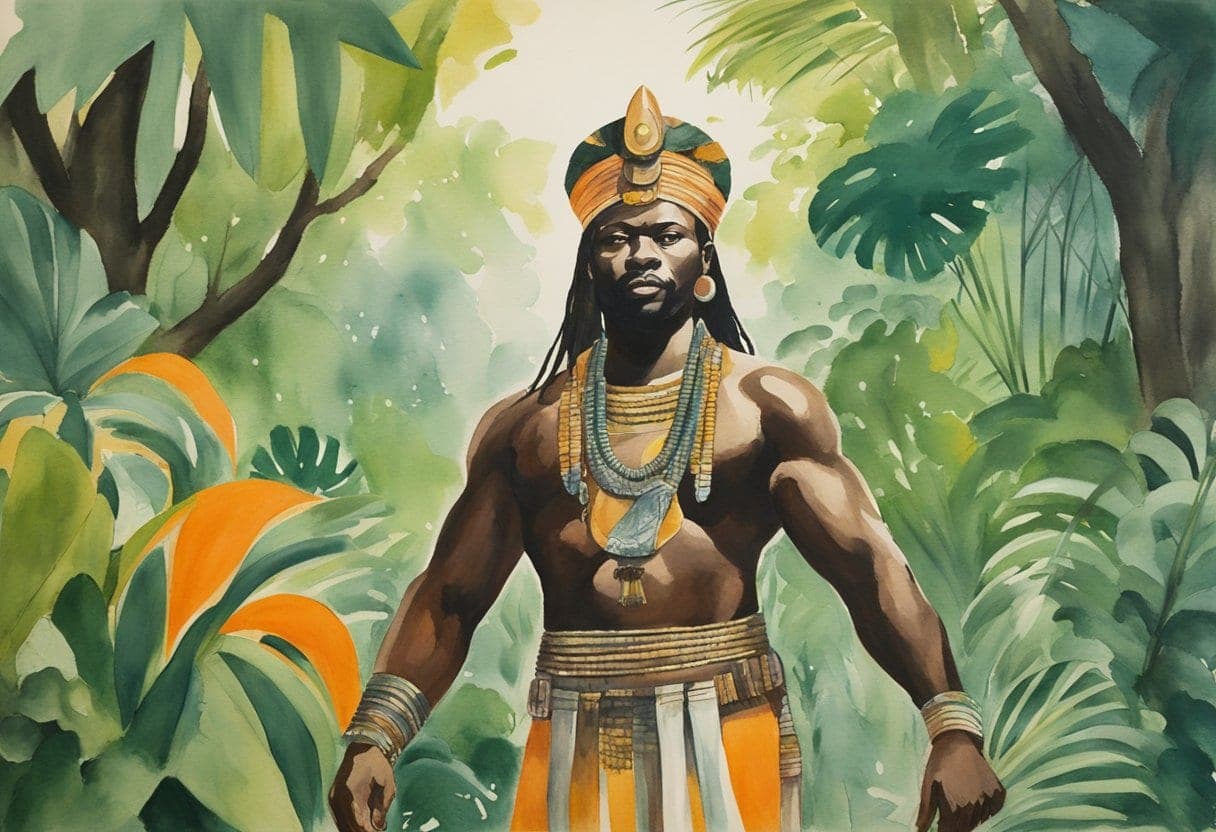
Ogun is the Orisha of iron, war, and technology. His influence extends from ancient Yoruba traditions to modern Afro-Caribbean faiths.
Worshippers see him as a fearless warrior and a skilled craftsman. He forges tools, weapons, and pathways for progress.
Ogun’s energy is powerful, determined, and sometimes relentless. He clears obstacles but demands discipline and respect.

Many turn to him for protection, justice, and strength. He is a force of creation and destruction. His symbols include iron tools, machetes, and chains.
Understanding Ogun means embracing the balance of power and responsibility.
1) Ogun: Fierce Warrior Spirit
Ogun stands as one of the most powerful Orishas in Yoruba religion. He rules over iron, technology, and warfare, making him a central figure in both creation and combat.
As the divine blacksmith and warrior, Ogun represents strength and innovation. He forges tools for both peace and war, showing his complex nature as a creator and destroyer.
The Ode-Oggun festival brings communities together each year to honor this mighty spirit. People celebrate with drums, dance, and special ceremonies that showcase his importance.
Ogun takes many forms, including Ogum Ajá and Ogum Ajaká. Each form shows different aspects of his warrior spirit, from strategic command to fierce battle expertise.
His influence spreads beyond Africa into Caribbean traditions. Many people still honor him as a protector and guide, especially those who work with metal and machinery.
2) God of Iron in Yoruba Tradition
Ogun stands as a powerful deity in Yoruba religion, ruling over iron, metalwork, and technology. His connection to iron makes him essential to both craftsmen and warriors.
As the patron of blacksmiths, Ogun's tools include the hammer, anvil, and forge. These items represent his mastery over metal and his role in human progress.
Iron tools and weapons hold special meaning in Ogun's worship. Devotees often place metal objects at his shrines as offerings to gain his favor and protection.
The Ode-Oggun festival celebrates his power through drumming and dancing. People gather to honor his gifts of metalwork and technological advancement.
Ogun's influence extends beyond traditional blacksmithing. His domain includes modern machinery, cars, and tools. This makes him relevant in both ancient practices and current daily life.
The color green represents Ogun's energy in Yoruba tradition. His followers often wear green clothing during ceremonies to show their respect.
3) Guardian of Justice and Order
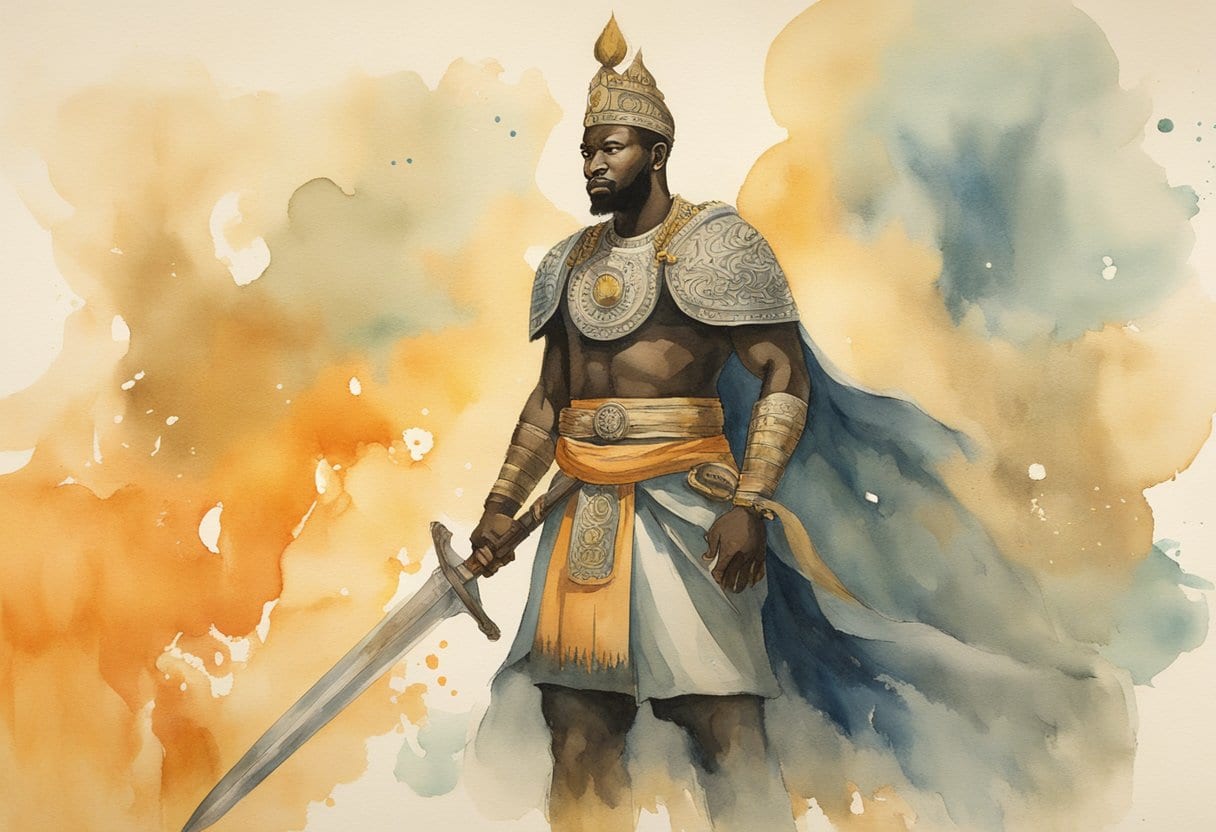
Ogun serves as a protector of justice and fairness in Yoruba traditions. His role extends beyond warfare into maintaining social balance and order.
As the first king of Ife, Ogun established himself as a fierce defender of his people. He fought to protect their rights and ensure justice prevailed in their community.
In Santeria and other Afro-Caribbean practices, people often connect Ogun with Saint Peter or Saint George. These associations highlight his role as a guardian of divine order.
His tools of iron and metal represent strength and authority. These symbols show his power to enforce justice and maintain stability in both the physical and spiritual worlds.
People seek Ogun's guidance when facing unfair situations. They believe his warrior spirit helps right wrongs and restore balance to their lives.
4) Santeria's Saint Peter Syncretism
Santeria practitioners syncretized their traditional Orisha worship with Catholic saints during the time of slavery. This practice helped them continue their beliefs while avoiding suspicion from slave masters.
Ogun, the powerful Orisha of metals and warfare, became linked with Saint Peter in this religious tradition. Saint Peter's role as a fisherman before becoming an apostle connects to Ogun's association with metal tools and hard work.
Ogun carries the sacred numbers 3 and 7 and is often represented by tools like hammers, machetes, and shovels. His colors are green and black, and his sacred spaces include forests and wilderness areas.
The merging of these two religious figures shows the creative ways African spiritual traditions survived in the Americas. Both Saint Peter and Ogun share qualities of strength, protection, and dedication to their work.
Many Santeria devotees today maintain this connection between Saint Peter and Ogun. They honor both figures through prayers, offerings, and religious ceremonies.
5) The Craftsman: Master of Technology
Ogun stands as the master craftsman and artist in Yoruba tradition, representing the essence of creation and technological advancement. His domain extends beyond simple metalworking to encompass all forms of innovation and craftsmanship.
As the god of iron and technology, Ogun's influence touches every tool and machine humans create. His spirit lives in the workshops of blacksmiths, in modern factories, and even in today's digital devices.
The tools of Ogun's craft are sacred objects, from the simplest hammer to the most complex machinery. His mastery extends to farming implements, weapons, and artistic tools, making him essential to both peaceful creation and warfare.
In modern interpretations, Ogun's realm includes cars, computers, and industrial equipment. His presence reminds us that technology serves as both a creative and destructive force, requiring wisdom and skill to use properly.
People still honor Ogun's creative spirit when starting new projects or learning technical skills. His legacy lives on in every innovation and technological breakthrough that shapes our world.
6) Pataki: Ogun's Endless Toil
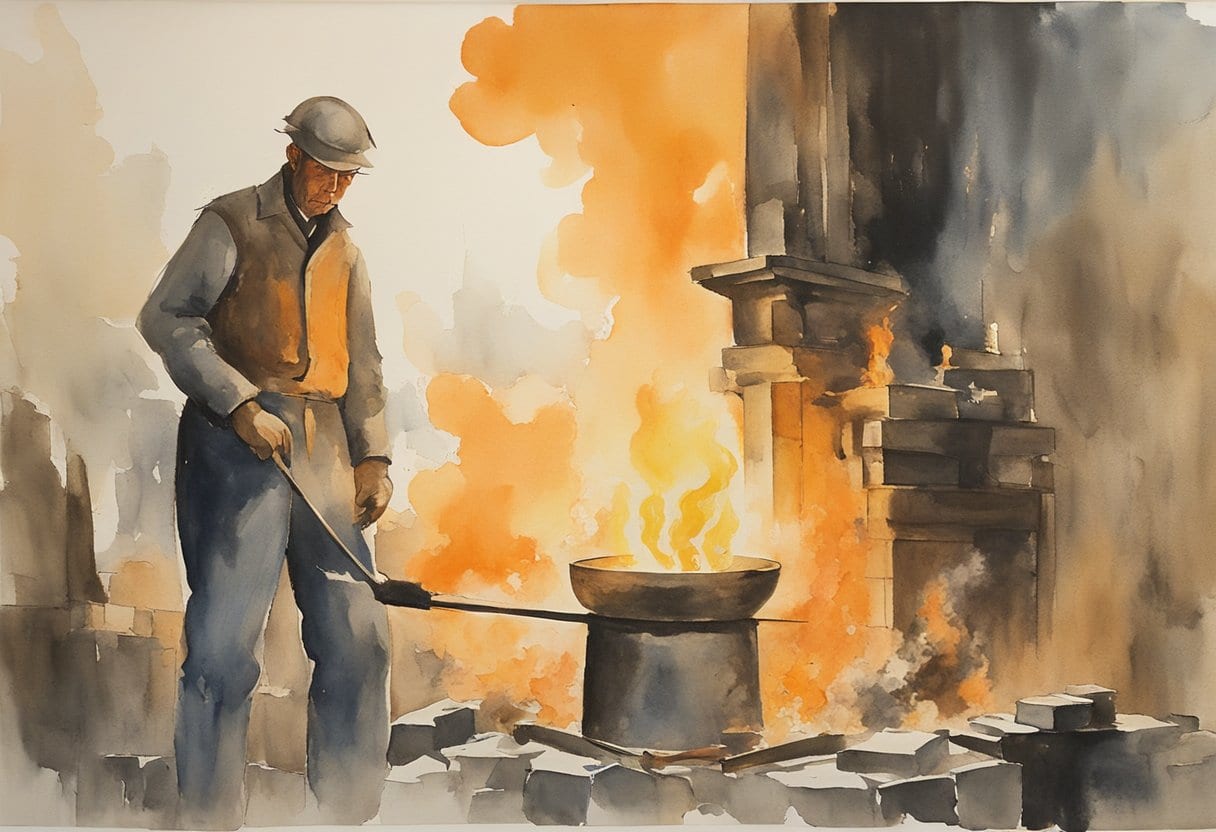
Ogun, the powerful warrior Orisha, dedicated his life to working with metal and crafting tools. His strength and determination made him a master of iron and steel.
In the mountains, Ogun worked tirelessly at his forge. The constant sound of his hammer striking metal echoed through the wilderness, marking his endless dedication to his craft.
The warrior Orisha spent most of his time alone in the dense forest. He preferred solitude and hard work to the company of others, focusing on perfecting his metalworking skills.
His devotion to craftsmanship brought tools and weapons to the world. Every axe, knife, and farming tool carried the mark of Ogun's careful work.
The story teaches that true mastery comes from dedication and hard work. Ogun's endless toil in his mountain forge shows the value of focusing on one's craft.
7) Protector of Blacksmiths and Craftsmen
Ogun holds a special place as the patron deity of blacksmiths, metalworkers, and craftsmen. His mastery of iron and tools makes him the ultimate guardian of those who work with metals and create with their hands.
The tools of iron and metalworking are sacred symbols of Ogun's power.
Hammers, anvils, and other blacksmith tools represent his connection to human innovation and technological advancement.
As a deity of technology and creativity, Ogun guides those who build and create.
He watches over mechanics, engineers, and anyone who works with metal tools or machinery.
In workshops and forges across West Africa and the Caribbean, craftsmen still honor Ogun before beginning their work.
They believe his blessing brings skill to their hands and strength to their creations.
Metal workers seek Ogun's protection from accidents and injuries.
His energy flows through every tool they use, helping them shape raw materials into useful objects that serve their communities.
8) Rum-Making and Ogun's Influence
Ogun's connection to rum-making runs deep in Afro-Caribbean traditions. The spirit watches over the entire process of turning sugarcane into rum.
The powerful Orisha of metal and technology brings his skills as a craftsman to rum production.
His expertise with fire and transformation makes him a natural guardian of distillation.
In many traditions, rum serves as a sacred offering to Ogun.
The strong drink mirrors his fierce nature and embodies the heat of his forge.
The Yoruba deity's influence extends beyond just watching over production.
Rum holds spiritual significance in rituals and ceremonies dedicated to Ogun across different African diaspora religions.
People often leave rum offerings at crossroads and workshops - places where Ogun's energy is strongest.
The drink represents both his blessing of technological processes and his role as a spiritual force.
9) Orisha in Yoruba and Its Diasporas
The Yoruba religion centers on divine spirits called Orisha, who serve as intermediaries between humans and the supreme being.
These deities play essential roles in both traditional African spirituality and its expressions across the world.
Notable Orisha include Obatala the sky father, Elegua the trickster, Ogun the god of iron, Yemaya the ocean mother, and Shango the thunder deity. Each brings unique powers and attributes to the spiritual tradition.
The Orisha tradition spread beyond Nigeria through the African diaspora.
It took root in new forms like Haitian Vodou, Cuban Santería, and Brazilian Candomblé.
In these diasporic religions, the Orisha maintained their core essence while adapting to local cultures.
Many of the original Yoruba deities kept their basic roles and characteristics even as their names changed slightly in different regions.
The spirits remain vital guides for spiritual practice today.
People seek their wisdom and support for everything from daily challenges to major life decisions.
10) Primordial Deity Sent by Olodumare
Olodumare, the Supreme Being of Yoruba religion, sent special deities called Orishas to Earth with important tasks.
These divine beings had specific missions to help shape the world and guide humanity.
The Orishas worked under Olodumare's watchful eye as divine helpers rather than independent gods.
They received clear instructions to teach the first humans and establish order in the new world.
Before Earth's creation, these primordial gods lived with Olodumare in the spiritual realm as Ara Orun.
Their role was to bridge the gap between the divine and human worlds.
The original world had skies and waters much closer together than they are now.
The Orishas helped maintain balance between these realms while teaching humans spiritual and moral practices.
Each Orisha received specific powers and responsibilities from Olodumare to help guide and protect humanity.
They continue to serve as important spiritual guides in Yoruba religious tradition.
Understanding Ogun in Afro-Caribbean Beliefs
Ogun remains a central figure in Afro-Caribbean religious traditions, where his powers extend beyond war and iron to include justice and protection. His presence spans multiple belief systems, each adding unique elements to his worship while maintaining his core attributes.
Historical Significance
The arrival of enslaved Yoruba people in the Caribbean led to Ogun's integration into various religious practices.
In Santería, he became known as Ogún, while in Candomblé, followers call him Ogum.
These traditions blend African beliefs with Catholic elements, often linking Ogun to warrior saints like St. George.
Religious communities maintain shrines dedicated to Ogun, placing metal tools and green items as offerings.
His followers often wear green and black beads as symbols of devotion.
Symbolism and Attributes
In Afro-Caribbean traditions, Ogun represents both creation and destruction.
His tools include machetes, knives, and other iron implements that symbolize his role as a divine craftsman.
The color green represents Ogun's connection to forests and nature. Black symbolizes his strength and mystery.
He serves as a protector of metalworkers, drivers, and hunters.
Many believers seek his help for protection during travel and work-related activities.
Rituals and Practices Associated with Ogun
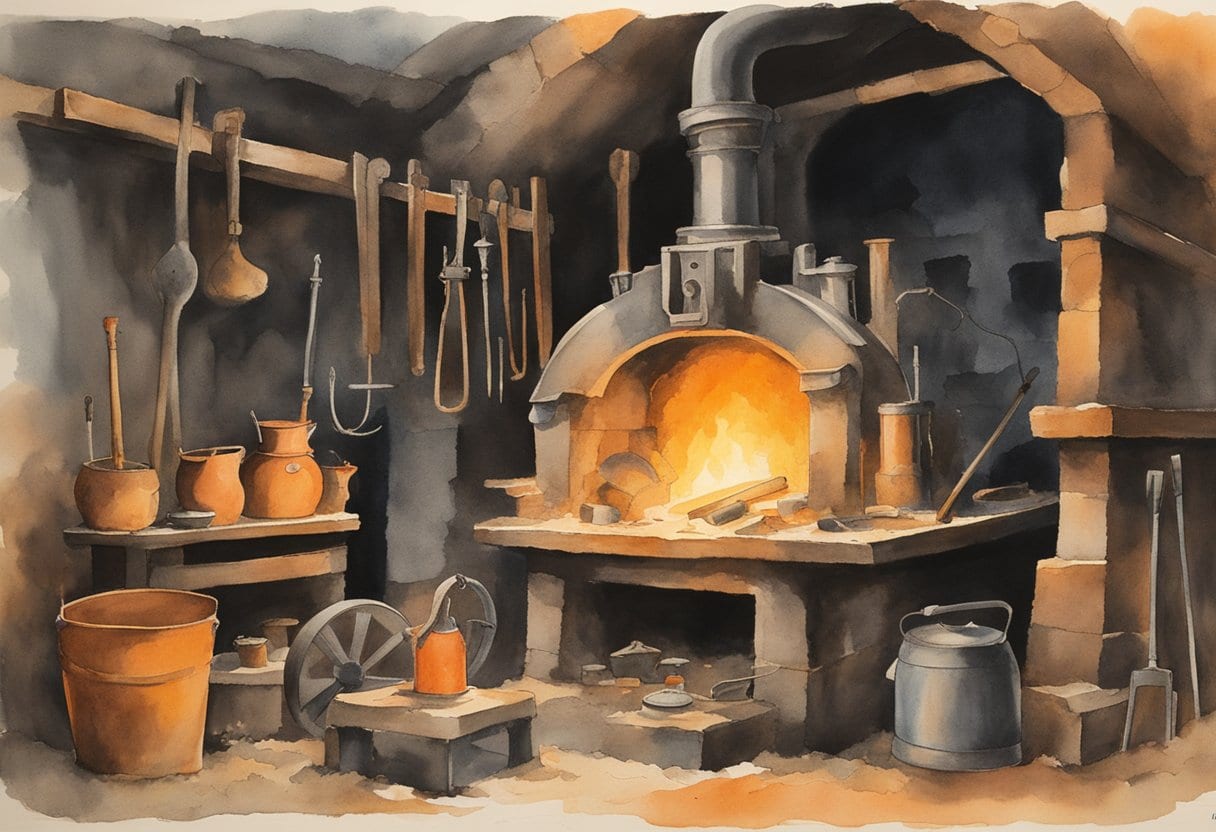
Sacred rituals honor Ogun through specific offerings, festivals, and ceremonies that reflect his connection to iron, warfare, and progress. His followers engage in unique practices that combine traditional elements with modern adaptations.
Common Offerings
Traditional offerings to Ogun include metal objects, tools, and weapons that represent his domain over iron and technology.
Devotees place metal tools and weapons near altars dedicated to Ogun.
These items often include:
- Hammers and nails
- Knives and machetes
- Keys and locks
- Railroad spikes
- Metal chains
Palm wine and rum are poured as libations during ceremonies. Fresh fruits and cooked yams complement these offerings.
Festivals and Celebrations
Special ceremonies and rituals take place throughout the year to honor Ogun.
Many communities hold annual festivals where blacksmiths demonstrate their craft.
Drummers play sacred rhythms on metal bells and gongs during these celebrations.
Dancers perform with machetes and other metal tools to show their connection to Ogun's power.
Ritual cleansing ceremonies use special herbs and waters blessed in Ogun's name.
These ceremonies aim to bring strength and protection to participants.
Communities gather at crossroads and near railroad tracks - places associated with iron and technology - to perform these rituals.
Many celebrations occur at dawn, which is considered Ogun's sacred time.
Frequently Asked Questions
Ogun stands as one of the most important deities in Yoruba and Afro-Caribbean traditions as the warrior god of iron, craftsmanship, and warfare. His influence extends across metalworking, justice, and technological innovation.
Who is Ogun in African mythology?
Ogun is the powerful Orisha of iron and metalwork in Yoruba religion.
He used his metal axe to clear paths for other Orishas to reach Earth.
His role as divine blacksmith makes him the patron of all who work with metal and machines.
What are the attributes and powers of Ogun in the Orisha pantheon?
Ogun possesses mastery over iron, warfare, and truth. He protects warriors and craftspeople.
His powers extend to technology, tools, and progress. He brings strength and justice to his followers.
Can you describe the rituals and offerings typically associated with the worship of Ogun?
Offerings often include palm oil, metal objects, and tools.
Sacred spaces for Ogun typically contain iron implements.
Dogs are considered sacred to him, as they helped him create paths between realms.
In what ways is Ogun represented in Afro-Caribbean mythological traditions?
In Santeria, Ogun syncretizes with Saint Peter.
He maintains his role as master of iron and protector of metalworkers.
His worship spread through the Caribbean during the colonial period, where his attributes merged with local traditions.
What are the common taboos and prohibitions linked with Ogun in Yoruba beliefs?
Breaking promises or speaking falsely offends Ogun as the guardian of truth and oaths.
Disrespecting tools or weapons can anger him, as these are his sacred instruments.
How is Ogun depicted in terms of symbols and colors within the religious traditions that venerate him?
The color green represents Ogun's connection to nature and power.
Iron tools and weapons serve as his primary symbols.
Dogs, palm fronds, and metallic objects represent his presence in sacred spaces.
Ready to restore your own photos?
Our artists bring your damaged photos back by hand, most within a few days.
Rated 4.96 out of 5 stars.4.96/5 · Loved by 400,000+ families