West African Griots: Keepers of Oral History and Musical Tradition
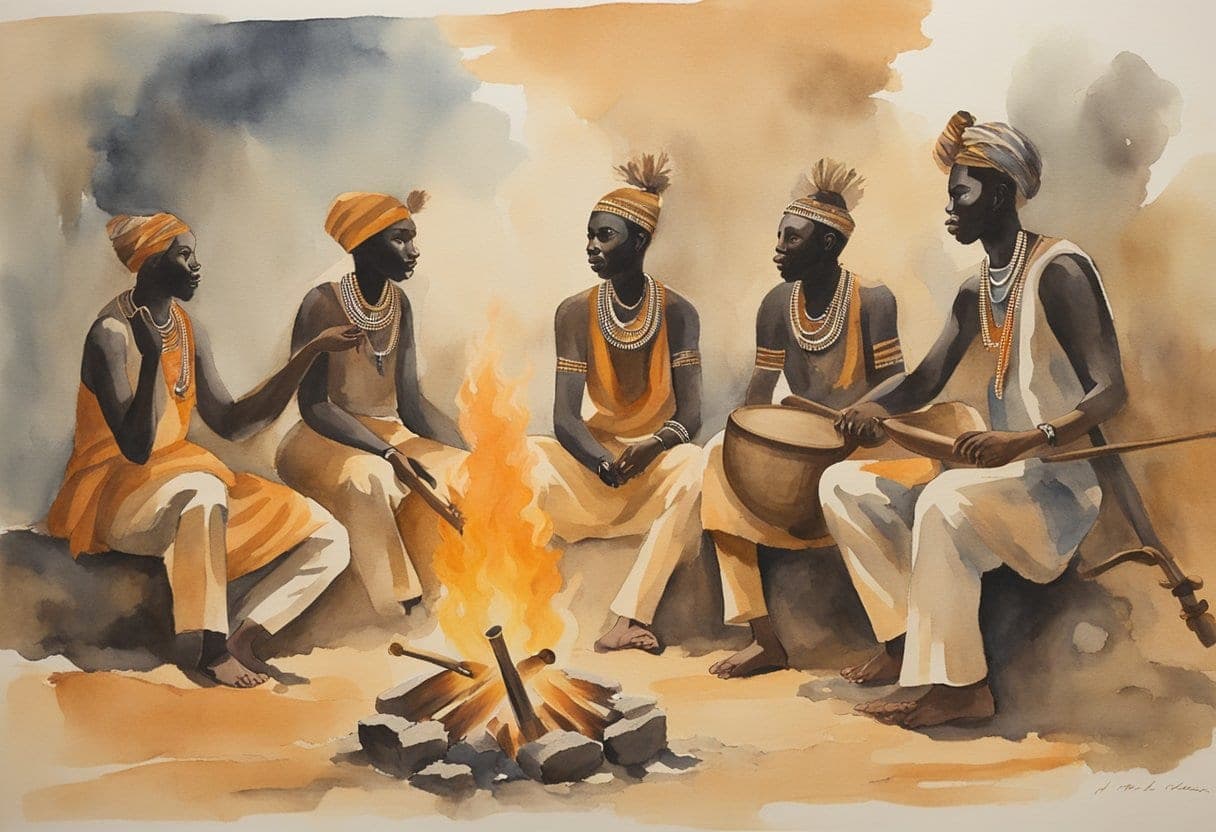
Griots play a key role in preserving West African culture. They use traditional instruments like the kora to accompany their tales.
Their performances bring history to life in a unique way. Griots remind us how important it is to remember where we come from.
1) Djeli Kouyaté's Epic Tales
Djeli Mamadou Kouyaté is a master storyteller from West Africa. He's part of a long line of griots who have served the Keita princes of Mali for generations.
These griots are like living history books.
Kouyaté sees himself as a "vessel of speech". He believes that without griots, people would forget their history.
His tales aren't just stories - they're a way to keep the past alive.
One of Kouyaté's most famous tales is about Sundiata, the founder of the Mali Empire. This epic story mixes history and legend. It tells of Sundiata's rise from a disabled boy to a great king.
Kouyaté's storytelling is more than just words. He uses music and performance to bring his tales to life.
His stories preserve the names and deeds of great kings. They also keep old secrets and traditions alive.
Through Kouyaté's tales, listeners can travel back in time. They can experience the triumphs and struggles of their ancestors. His stories are a bridge between past and present, keeping West African culture vibrant and alive.
2) Kora Melodies by Toumani Diabaté
Toumani Diabaté's kora melodies are a treasure of West African music. This talented musician comes from a long line of griots, the keepers of Mali's oral history and traditions.
The kora, with its 21 strings, is Diabaté's instrument of choice. It's a harp-like instrument that's been central to West African music for centuries. Diabaté's skill with the kora is unmatched.
His music blends old and new. He plays traditional griot songs but also creates his own compositions.
This mix keeps the ancient art form alive while pushing it in new directions.
Diabaté's melodies are complex yet accessible. They weave intricate patterns that captivate listeners worldwide.
His music has brought the kora to global audiences, spreading the rich culture of Mali.
Through his kora playing, Diabaté preserves the stories and traditions of the ancient Mandé empire. His melodies are more than just music - they're a living link to history.
3) Amadou Bansang Jobarteh's Legacy
Amadou Bansang Jobarteh was a big deal in West African music. He played the kora, a special 21-string instrument. People loved his skills and music.
Jobarteh came from a famous family of griots. Griots are like living history books. They tell stories and play music to keep traditions alive.
His talent wasn't just about playing notes. Jobarteh knew how to touch people's hearts with his music. He could make the kora sing in ways that amazed everyone.
But Jobarteh did more than just play. He taught others too.
One of his students was his grandson, Sanjally Jobarteh. This shows how he kept the family tradition going.
Amadou's legacy lives on through his family. His granddaughter, Sona Jobarteh, is now a famous kora player too. She's breaking new ground as a woman in this traditionally male role.
The Jobarteh family continues to share their music with the world. They're keeping the griot tradition alive while also making it fresh for new listeners.
4) The Story of Sundiata Keita
The epic of Sundiata is a beloved tale from West Africa. It tells the story of Sundiata Keita, the founder of the Mali Empire. This hero's journey has been passed down through generations by griots.
Sundiata's story is full of twists and turns. As a child, he couldn't walk. But he overcame this challenge and grew into a strong leader. His rise to power wasn't easy. He had to face many obstacles and enemies.
The tale includes magic, betrayal, and epic battles. It shows how Sundiata united different groups to create a powerful empire. His story teaches about leadership, perseverance, and the importance of community.
Griots have shared this epic for over 700 years. They use music, poetry, and storytelling to bring it to life. The story changes a bit with each telling, but its core remains the same.
Sundiata's legacy lives on in West African culture. His tale inspires people to this day. It reminds us that anyone can overcome challenges and achieve greatness.
5) Griot Poetry for Generations
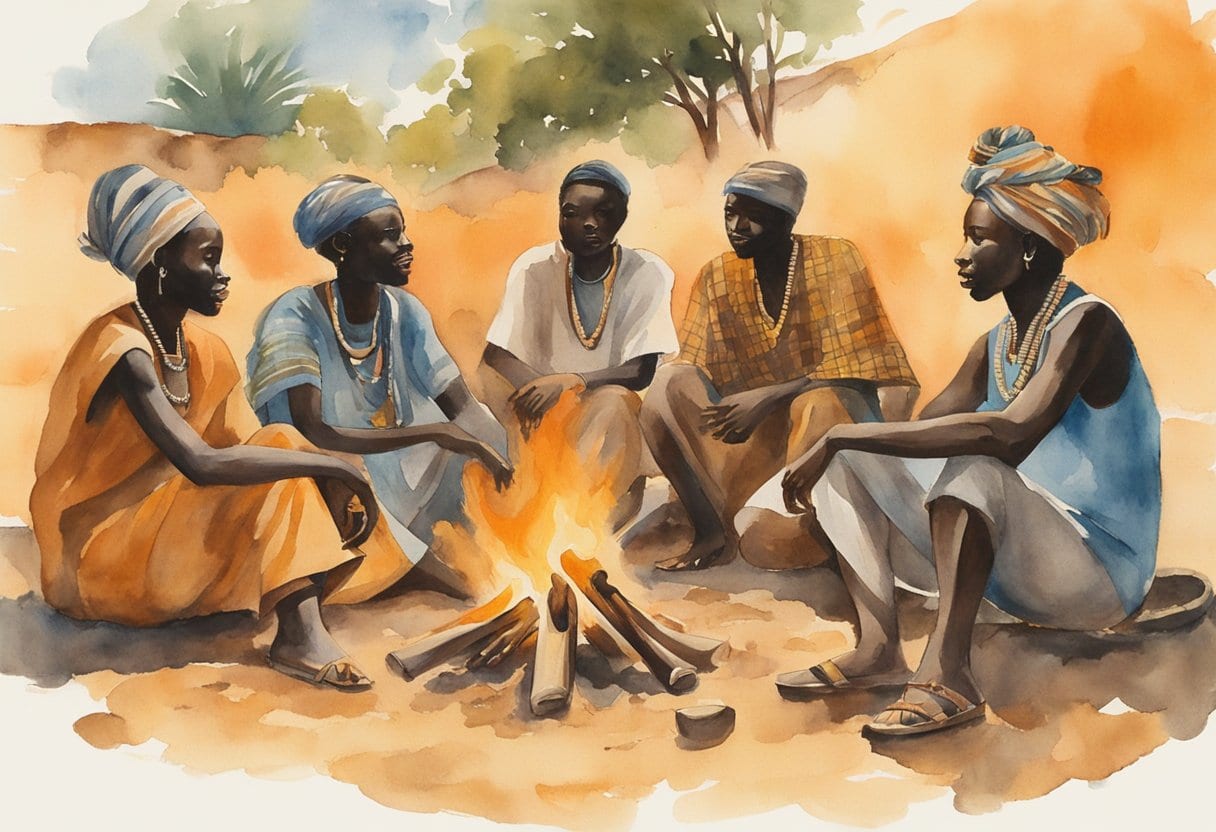
Griots are more than just storytellers. They're living libraries of West African culture. Their poetry speaks volumes about history, lineage, and societal values.
These verses aren't written down. They're passed from one generation to the next through oral tradition.
It's a beautiful dance of words and rhythm that captivates audiences young and old.
Griot poetry often focuses on family histories. It weaves tales of ancestors, their deeds, and their impact on the community. This keeps the past alive and relevant for future generations.
The poetry isn't just about the past, though.
Modern-day griots adapt their craft to address current issues. They blend traditional styles with contemporary themes, keeping the art form fresh and engaging.
Listening to griot poetry is like taking a journey through time. It's a unique way to learn about West African culture and values. The rhythmic verses stick in your mind, making the lessons easy to remember and share.
6) Balafon Tunes of Guinea
The balafon, a traditional West African xylophone, plays a key role in Guinean music. This instrument has been around for over 800 years and is deeply linked to the Mande culture.
In Guinea, the balafon creates warm, melodic sounds that stir up various emotions. It's a central part of many musical styles in the country.
Balafon players in Guinea often come from families of griots. These storytellers use the instrument to bring history to life through music.
The tunes played on the balafon in Guinea are more than just pleasant melodies. They carry important cultural stories and traditions.
Guinean balafon music often features fast, complex rhythms. These beats reflect the rich musical heritage of the region.
Modern Guinean artists continue to use the balafon in their work. They blend traditional tunes with new styles, keeping the instrument's legacy alive.
7) Songs of the Mali Empire
The Mali Empire's musical legacy lives on through its griots. These talented performers kept history alive with their songs.
They sang about brave rulers and epic battles. Griots used special instruments to tell their tales.
The kora, a 21-stringed harp, was a favorite. Its haunting melodies helped bring stories to life.
One famous song celebrated Sundiata Keita, the empire's founder. It told of his rise from a disabled child to a powerful leader.
This tale inspired people for generations. Griots also sang about daily life in the empire.
They described bustling markets and sacred rituals. Their songs painted vivid pictures of a thriving culture.
Some griot songs praised important families. These tunes kept track of family histories and achievements.
They helped people remember their roots.
8) Famous Tales of Djelimady Sissoko
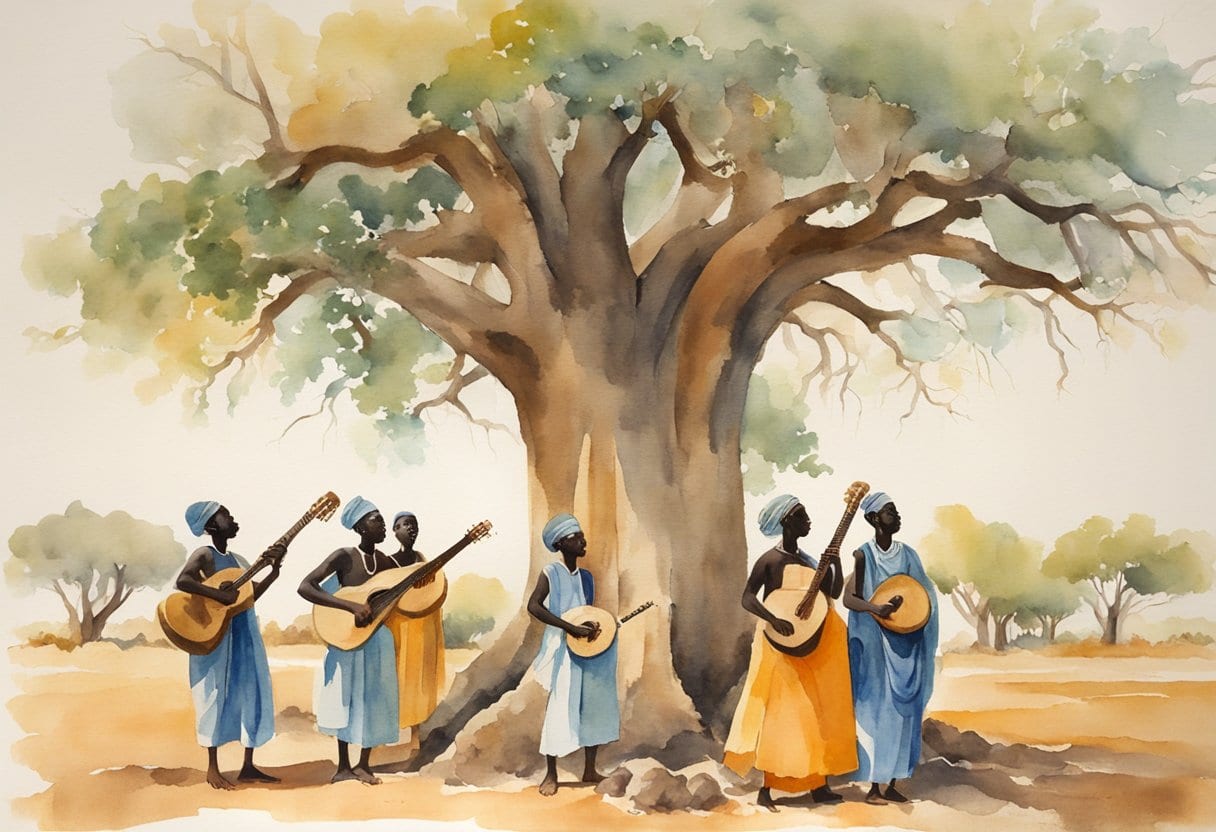
Djelimady Sissoko, a renowned West African griot, captivated audiences with his masterful storytelling and musical prowess. His tales often revolved around the rich history of Mali and its legendary figures.
One of Sissoko's most beloved stories recounted the epic of Sundiata Keita, the founder of the Mali Empire. Through his vivid narration, listeners felt transported to the 13th century, witnessing Sundiata's rise from a disabled prince to a powerful ruler.
Another famous tale in Sissoko's repertoire celebrated the bravery of Askia Muhammad, the Songhai Empire's most notable leader. His account painted a picture of Askia's military conquests and his pilgrimage to Mecca.
Sissoko's narratives weren't limited to historical figures. He also shared stories of everyday heroes, like the tale of a humble farmer who outsmarted a mischievous djinn. These relatable characters resonated deeply with his audience.
His performances often incorporated the kora, a 21-stringed West African harp. The melodies woven into his tales added depth and emotion, making the stories truly unforgettable.
Sissoko's ability to bring history to life through his words and music ensured that these important cultural narratives would be passed down to future generations. His legacy continues to inspire griots and storytellers across West Africa.
9) Oral Narratives by Balla Kouyaté
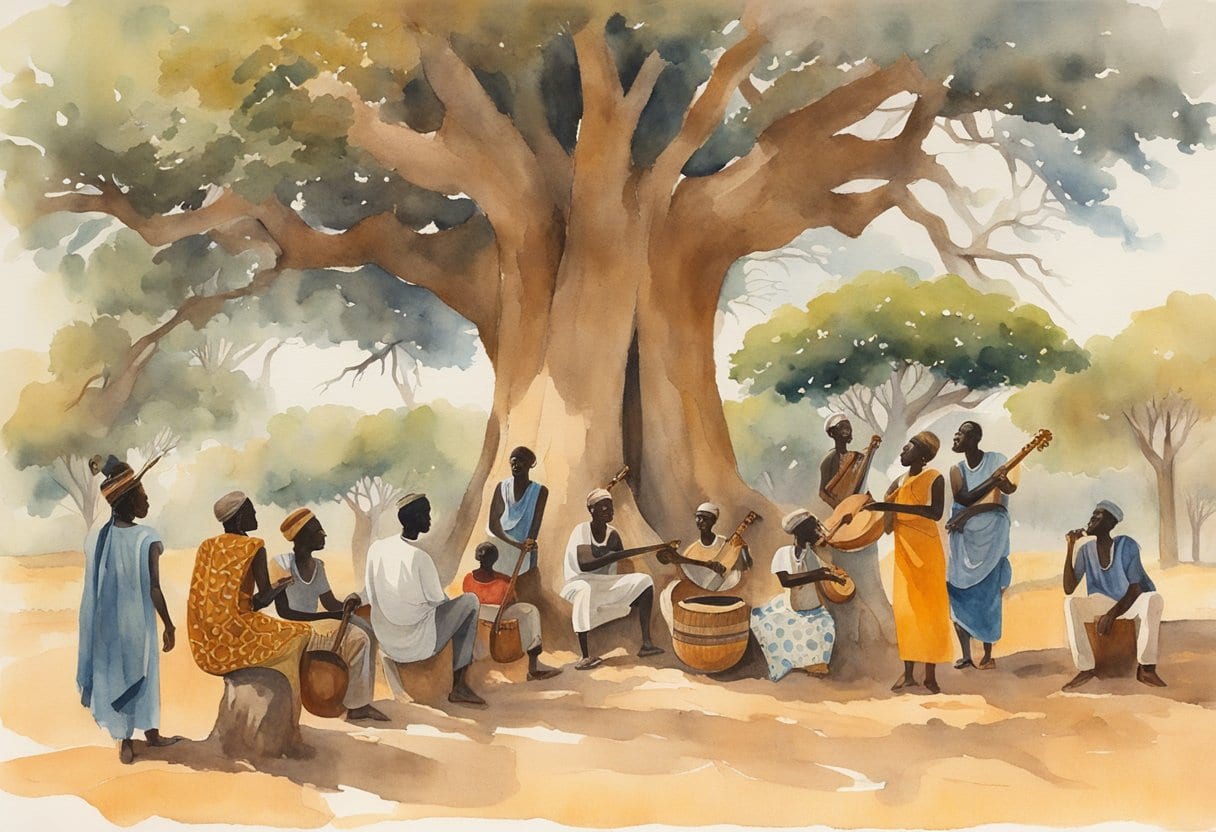
Balla Kouyaté is a modern-day griot who keeps West African oral traditions alive. He comes from a long line of storytellers and musicians dating back over 800 years. His ancestor, Balla Faséké, was the first of an unbroken line of djelis in the Kouyaté clan.
Kouyaté's oral narratives are rich with history and culture. He uses the balafon, a traditional xylophone-like instrument, to enhance his storytelling.
The balafon has been closely tied to the griot tradition for centuries.
His stories often include tales of the Mali Empire and its origins. These narratives are not just entertainment; they serve as a living record of West African history and traditions.
Kouyaté's performances blend music and storytelling seamlessly. He captivates audiences with his skill on the balafon and his knowledge of ancient tales.
Through his work, he ensures that the oral history of his people continues to be shared and preserved for future generations.
10) Soundtracks of Ancient Kingdoms
Imagine the rhythmic beats of drums echoing through time. These are the sounds of ancient West African kingdoms, brought to life by griots.
Griots were more than just musicians. They were living archives of oral history, preserving the stories of great empires like Mali and Songhai.
Their music painted vivid pictures of heroic deeds and royal lineages. With each strum of the kora, a 21-stringed harp-lute, griots transported listeners to bygone eras.
These musical storytellers held a special place in society. They were advisors to kings, keepers of tradition, and bridges between past and present.
Their songs celebrated victories, mourned losses, and taught important lessons. Every note carried the weight of history, every word a thread in the fabric of cultural identity.
Today, the griot tradition lives on. Modern griots continue to weave tales of ancient kingdoms into their music, keeping the past alive in the present.
The Role of Griots in West African Society
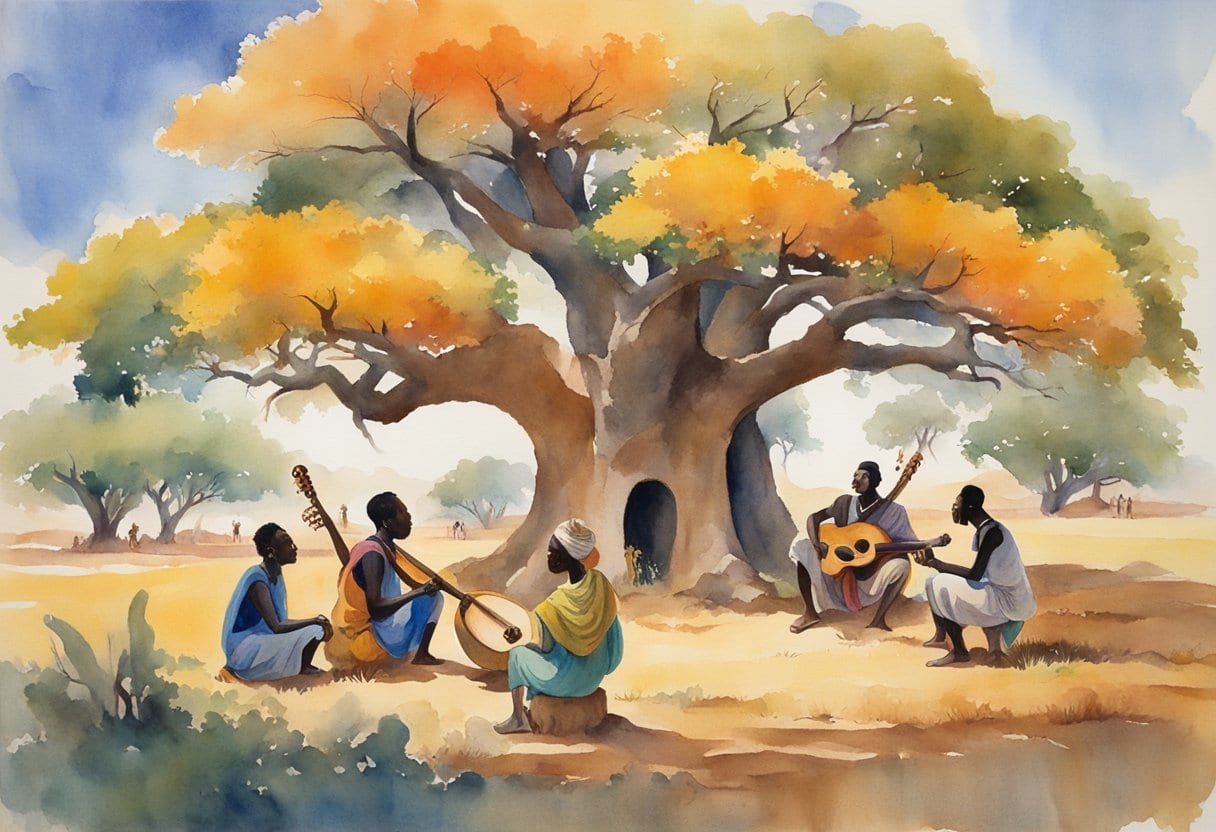
Griots hold a special place in West African culture. These talented individuals serve as storytellers, musicians, and keepers of history. Their role goes beyond mere entertainment, shaping the very fabric of society.
Historical Significance of Griots
Griots have been around since the 13th century, originating in the Mali Empire. They're not just performers - they're living libraries. Imagine having a person who knows all your family's history by heart!
These oral historians preserve genealogies and important events. They pass down stories from generation to generation. Without written records, griots kept history alive through their words and songs.
In the past, griots often worked for royal courts. They praised rulers and recounted their great deeds. This helped legitimize power and maintain social order.
Social and Cultural Influence
Griots are more than just historians. They're cultural ambassadors and social glue. Their stories and songs teach moral lessons and reinforce community values.
At celebrations, griots take center stage. They perform praise songs, celebrating individuals and their accomplishments. This helps build social bonds and boost morale.
Griots often play instruments like the kora, a 21-stringed harp-lute. Their music isn't just entertainment - it's a vital part of cultural expression.
In modern times, griots still play a crucial role. They help preserve languages and traditions that might otherwise be lost. Many now use radio and TV to reach wider audiences.
Oral History and Storytelling
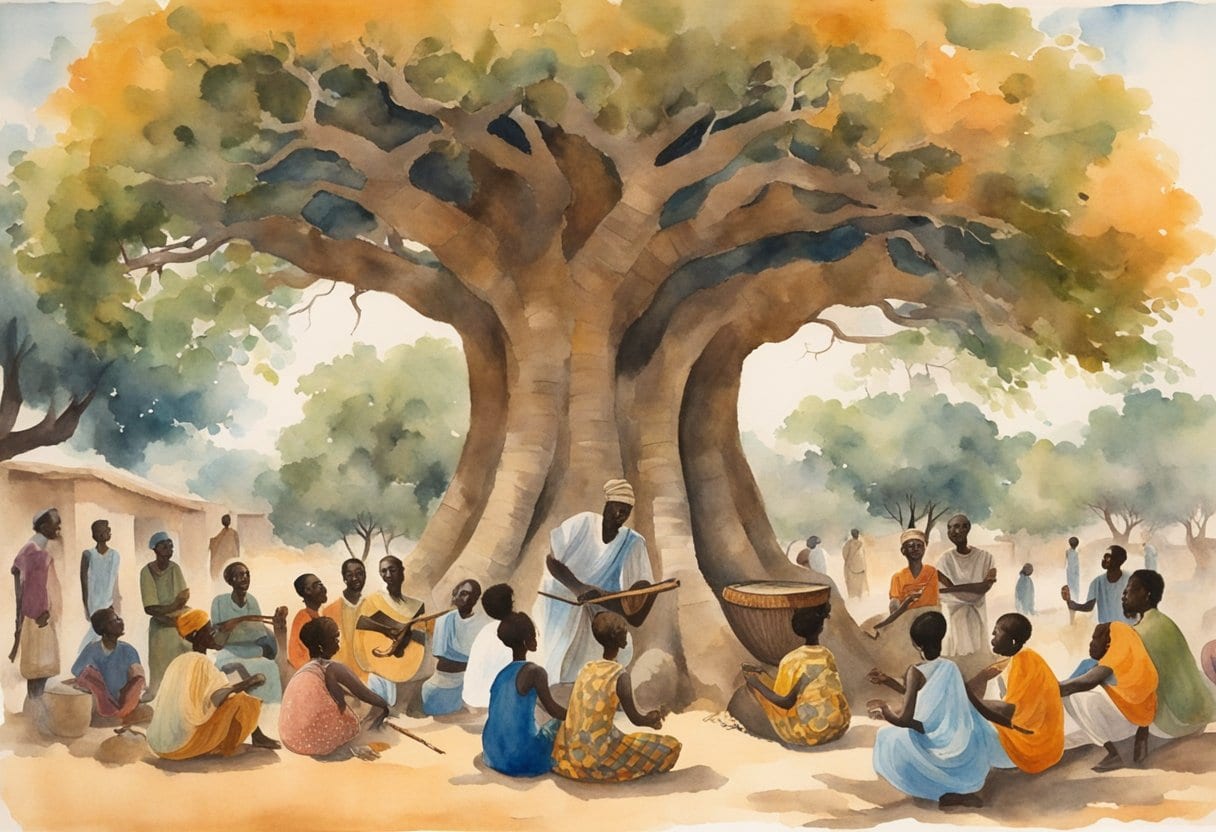
Griots in West Africa are masters of oral history and storytelling. They use unique techniques to preserve and share their culture's traditions, passing down knowledge from one generation to the next.
Techniques and Practices
Griots use several methods to keep stories alive. They often use music to make their tales more engaging. Many griots play the kora, a 21-string harp-lute, while telling stories. This mix of music and words helps people remember the tales better.
Repetition is another key technique. Griots repeat important parts of stories to help listeners remember them. They also use catchy phrases and rhythms in their storytelling.
Griots don't just recite facts. They bring stories to life with dramatic voices and gestures. This makes the tales more exciting and memorable for their audience.
Preservation of Traditions
Griots are like living history books. They keep track of family histories and important events in their communities. This helps preserve cultural identity over time.
They learn their craft from a young age, often from family members. This training can take years. It ensures that stories and traditions are passed down accurately.
Griots don't just preserve old stories. They also create new ones about current events. This keeps their storytelling tradition relevant and alive in modern times.
In some places, griots are working to record their stories. This helps protect their traditions for future generations.
Musical Traditions of Griots
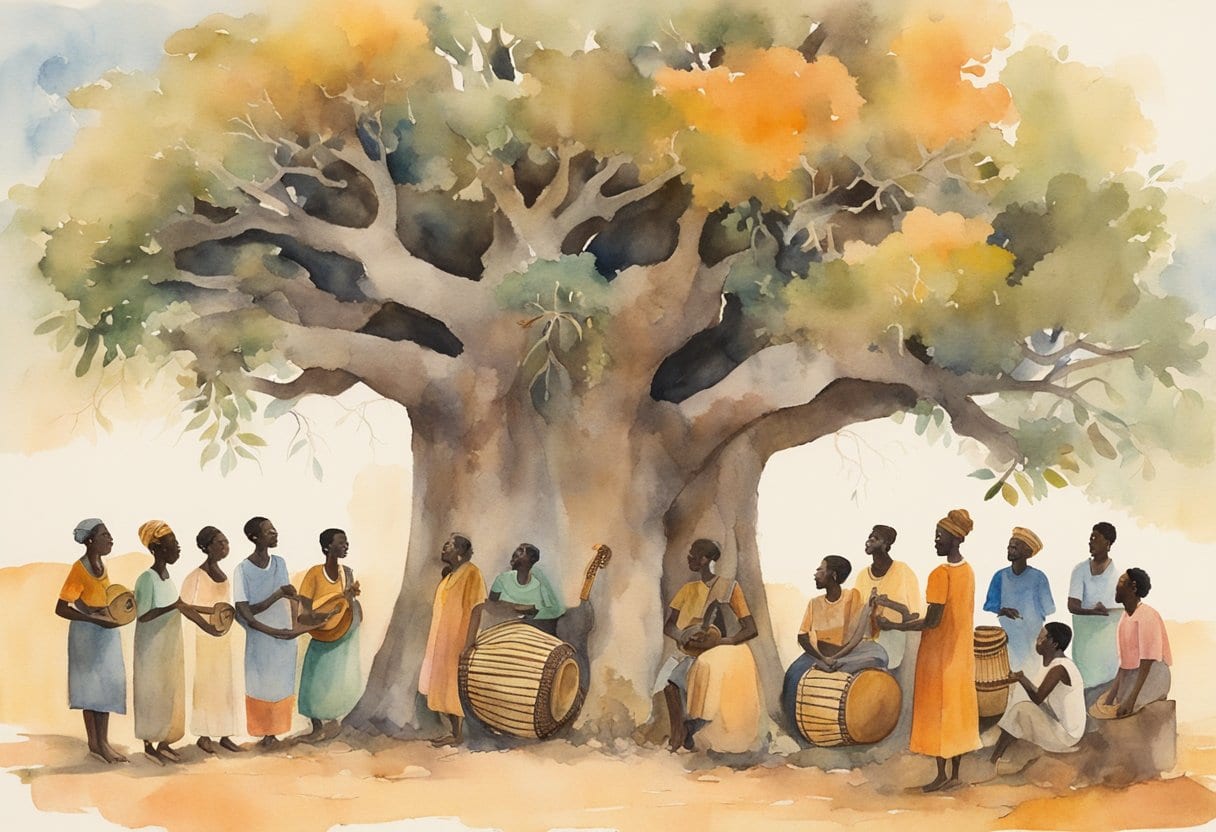
Griots are not just storytellers, but also talented musicians. Their musical traditions are rich and varied, with unique instruments and styles that have been passed down through generations.
Instruments Used by Griots
The kora is a key instrument for griots. It's a 21-stringed harp-lute that looks like a big gourd with a long neck. Griots pluck its strings to create beautiful melodies.
Another important instrument is the balafon. It's like a wooden xylophone. Griots hit its keys with mallets to make tunes.
Drums are also crucial. The djembe, a goblet-shaped drum, is popular. Griots use their hands to play complex rhythms on it.
Some griots play the ngoni. It's a small, guitar-like instrument with a wooden body and strings.
Genres and Styles
Griots have many musical styles. Praise singing is one of the most common.
They create songs to honor important people or events.
Epic storytelling is another key genre. Griots use music to bring ancient tales to life.
They might sing about great heroes or historic battles.
Some griots specialize in wedding music. Their songs celebrate love and offer advice to newlyweds.
Modern griots often mix traditional styles with new genres.
You might hear them blending ancient melodies with hip-hop or jazz.
Improvisation is a big part of griot music.
They often make up lyrics on the spot, responding to their audience or current events.
Frequently Asked Questions
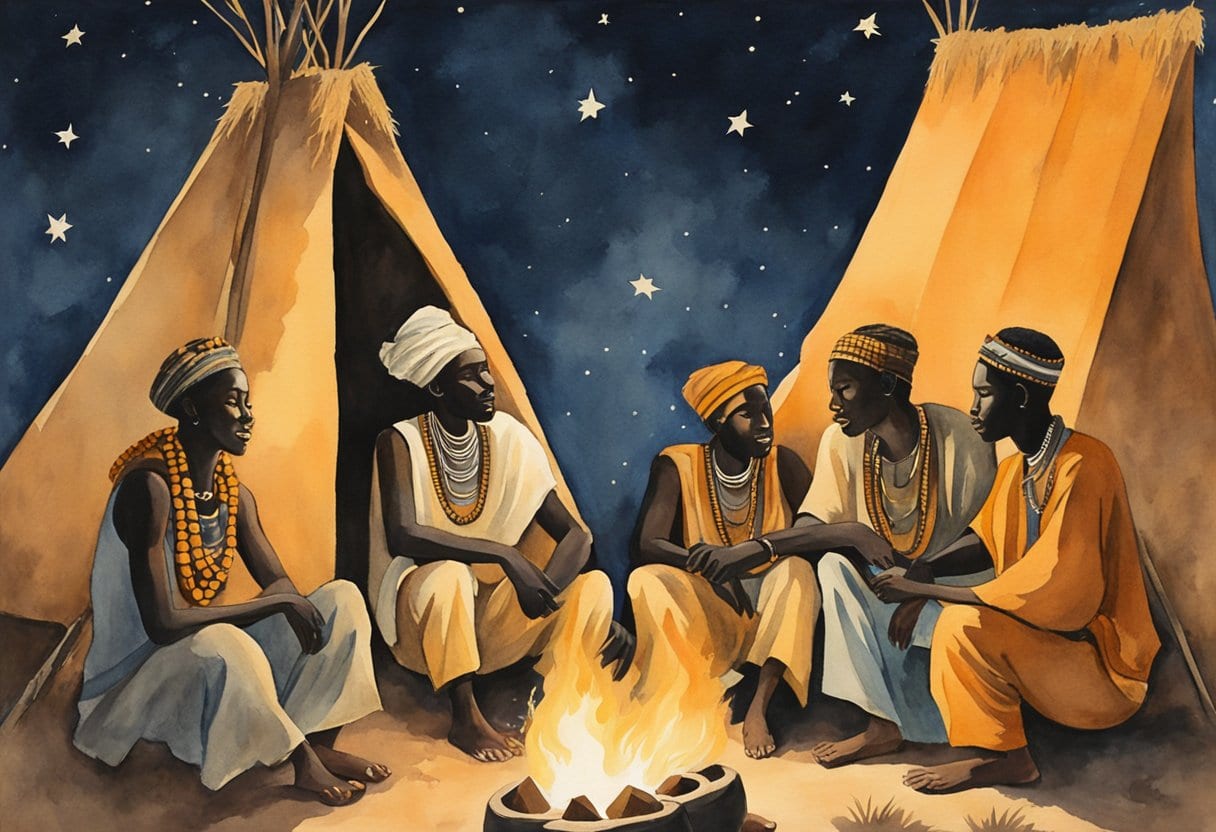
Griots play a crucial role in West African society, preserving history and culture through their unique storytelling and musical traditions.
Let's explore some key aspects of their art and significance.
Why are griots considered vital to West African society?
Griots are the keepers of oral history. They preserve genealogies, historical narratives, and traditions of their people.
Without griots, much of West African cultural heritage might be lost.
Their stories connect communities to their past. Griots help maintain social bonds and cultural identity across generations.
How do griots bring their stories to life during performances?
Griots are masterful performers. They use a mix of music, song, and spoken word to captivate audiences.
Many griots play instruments like the kora, a 21-stringed harp-lute.
They weave melodies with their words, creating a rich sensory experience.
Can women become griots in West African cultures?
Yes, women can be griots in many West African societies. Female griots are often called griottes.
They play important roles in preserving and sharing cultural knowledge.
Some traditions have specific roles for women griots, like performing at weddings or naming ceremonies.
What role do griots play in the preservation of oral tradition in West Africa?
Griots are living archives. They memorize vast amounts of historical and cultural information.
They pass down stories, genealogies, and customs orally. This keeps West African oral traditions alive from one generation to the next.
How does the musical tradition of griots contribute to African music as a whole?
Griot music has deeply influenced African music. Their traditional instruments and storytelling techniques are found in many modern African musical styles.
Artists like Toumani Diabaté have brought griot music to global audiences.
This has helped spread and preserve these musical traditions.
What elements distinguish griot storytelling from other forms of oral history?
Griot storytelling is highly performative. It combines music, poetry, and historical narrative in a unique way.
Griots often use praise-singing and genealogical recitation. These elements set their storytelling apart from other oral traditions.
Ready to restore your own photos?
Our artists bring your damaged photos back by hand, most within a few days.
Rated 4.96 out of 5 stars.4.96/5 · Loved by 400,000+ families