Cahokia’s Lost Secrets: 10 Fascinating Facts About North America’s Prehistoric Metropolis
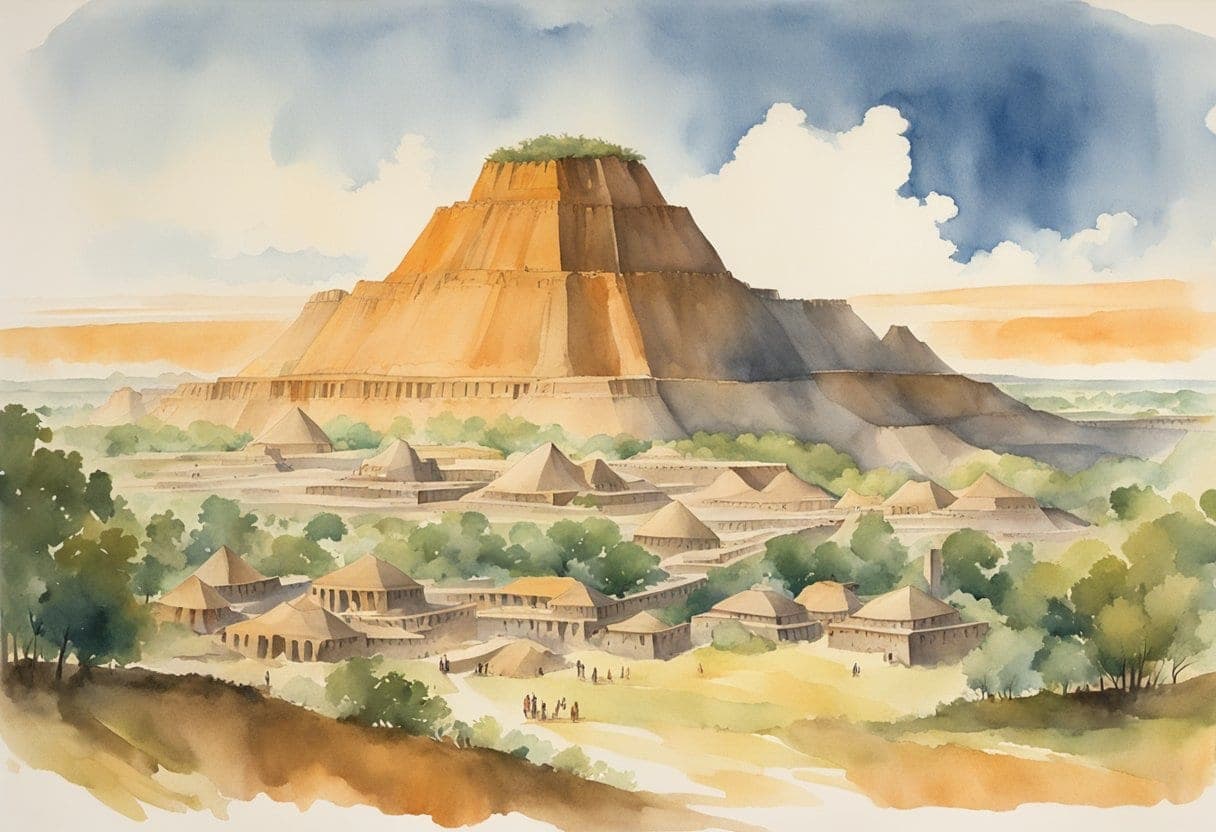
Long before skyscrapers, Cahokia stood as North America’s greatest city. It flourished between 1050 and 1350 AD. Over 20,000 people once lived there.
The city had towering mounds, bustling trade routes, and intricate social structures. Monk’s Mound, its tallest structure, still amazes visitors today.
Cahokia’s residents were skilled builders and farmers. They shaped the land to create their thriving society.
The city's decline is still debated by historians. Climate change, resource depletion, and conflict may have played a role.
Today, Cahokia remains an archaeological treasure, offering glimpses into a lost civilization.
1) Monks Mound: Largest earthen structure north of Mexico
Monks Mound stands as the largest earthwork in the Americas north of Mexico. Built between 900-955 CE, this massive structure rises 100 feet into the sky at the heart of Cahokia.
The mound earned its name from Trappist Monks who lived and gardened near the structure, though not on the mound itself. These religious settlers used the first terrace for growing crops.
The construction required an incredible 22 million cubic feet of earth. The base spans roughly 1,000 feet in length and 800 feet in width, featuring four distinct terraces built during different periods.
This impressive prehistoric structure covers 14 acres and showcases the advanced architectural abilities of Native American builders. The mound served as both a practical and ceremonial center for the ancient city of Cahokia.
Today, visitors can climb stairs to reach the top platform. From this vantage point, they can see the surrounding mounds and get a sense of how Cahokia's leaders would have viewed their city.
2) Cahokia's Central Grand Plaza
The Grand Plaza served as Cahokia's heart, spanning an impressive 47 acres between several important mounds. This central gathering space played a vital role in the city's daily life.
The plaza's northern edge featured the massive Monks Mound, which rose 100 feet high. Four mounds lined the eastern border, while two more marked the western edge.
The Cahokians built this plaza in the mid-11th century CE as the centerpiece of their city plan. The space hosted various community activities and events.
People used the plaza for games, trading, and ceremonies. Traders set up shelters along its edges, while residents played chunkey, a popular Native American game, in designated fields.
The Grand Plaza's size and layout showed the advanced planning abilities of Cahokia's builders. They created a level surface and maintained it for generations, demonstrating their engineering skills.
3) Stockade built around the central precinct
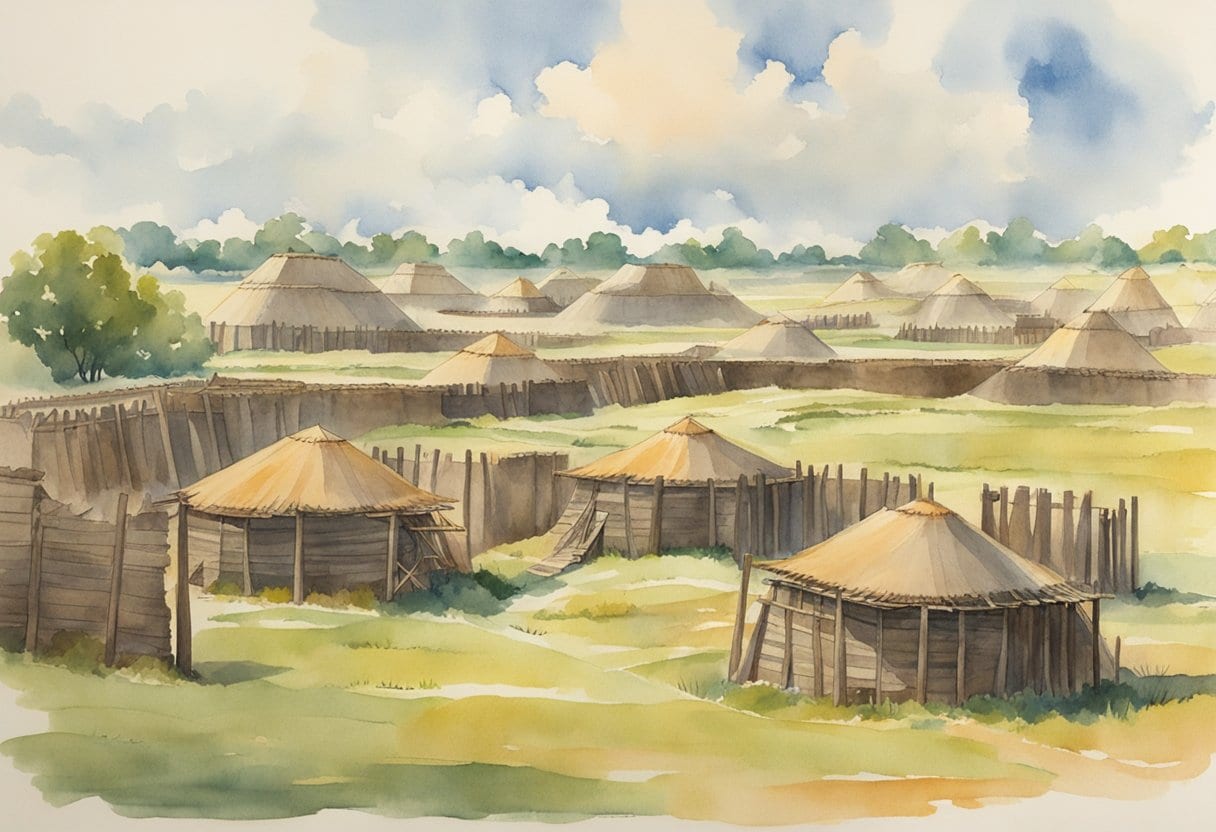
The defensive stockade wall built around Cahokia's central precinct was an impressive structure. Made from upright logs placed in deep trenches, it likely stood 10-15 feet high above the ground.
This massive two-mile-long wooden wall enclosed Monks Mound, the Grand Plaza, and 17 other mounds. It was constructed in the late 1100s CE and featured regularly-spaced bastions that served as guard towers.
The stockade served multiple purposes. Beyond defense, it created a social barrier that separated the sacred central precinct from the rest of the settlement. The elite members of Cahokian society lived within these walls.
Archaeological evidence shows that the Cahokians rebuilt the stockade four different times. Each reconstruction used a different style of bastions, showing how building techniques evolved over time.
The Palisade Gateway controlled access to this important central area. This entrance point helped regulate movement within the city and symbolized Cahokia's organized society.
4) Four terrace levels of Monks Mound
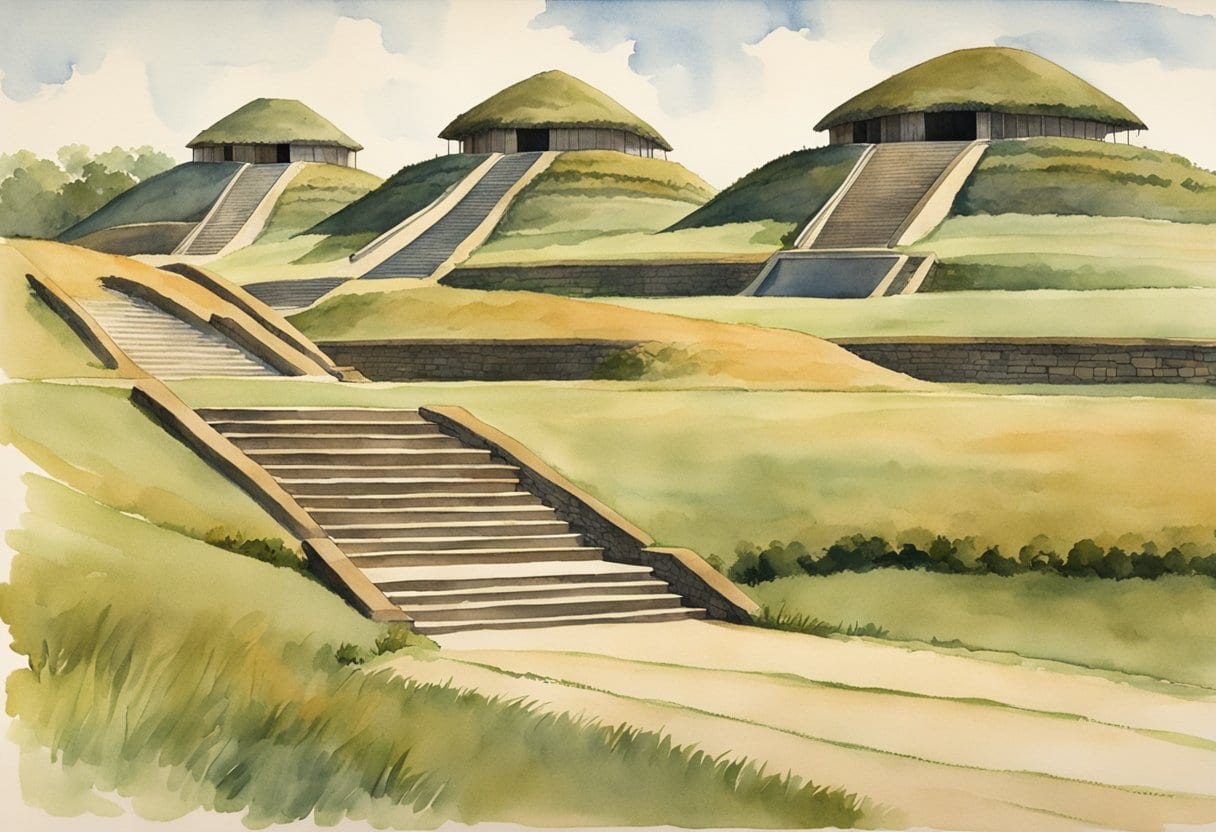
Monks Mound features four distinct terraces, with the first terrace being the lowest and the fourth terrace reaching the highest point. The first terrace spans the southern end of the mound, rising about 35 feet above ground level.
Each terrace level was carefully constructed by the ancient builders to create a massive stepped pyramid structure. The terraces served both practical and ceremonial purposes in the prehistoric city.
The first terrace includes a small mound on its southwest corner, adding complexity to the architectural design. This feature demonstrates the sophisticated engineering capabilities of the Native American builders.
The terraces were built between 900-955 CE, creating the largest prehistoric earthwork in the Americas. The builders used careful layering techniques to ensure the mound's stability as they constructed each level.
The four-terrace design allowed people to climb to the top of the 100-foot structure. From the highest terrace, one could see the entire ancient city spread out below.
5) Sweat lodges were small circular structures
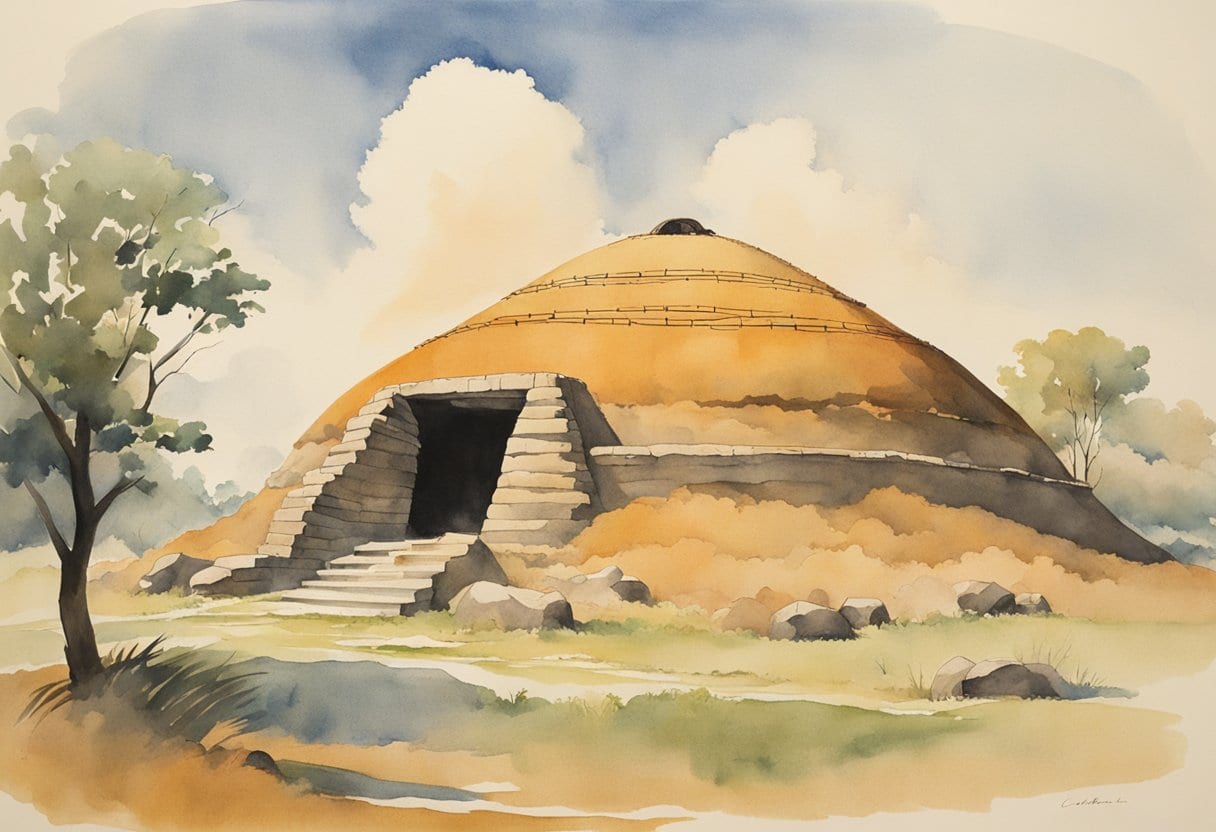
The small circular structures found at Cahokia Mounds were likely sweat lodges. These special buildings played important roles in the community's spiritual and healing practices.
Recent studies show that many circular platform mounds across the Cahokia region had sweat lodges on top of them. The sweat lodges were often paired with rectangular buildings.
The builders positioned these circular sweat lodges carefully within the settlement. They placed some on raised platforms and others at ground level near other important structures.
Sweat lodges served as spaces for purification rituals and healing ceremonies. The small size and round shape of these buildings helped create an intimate setting for these important practices.
Archaeological evidence shows the sweat lodges had special designs to contain heat and steam. The structures needed to be sturdy enough to withstand regular use while maintaining their sacred purpose.
6) Remains of wooden temples on mounds
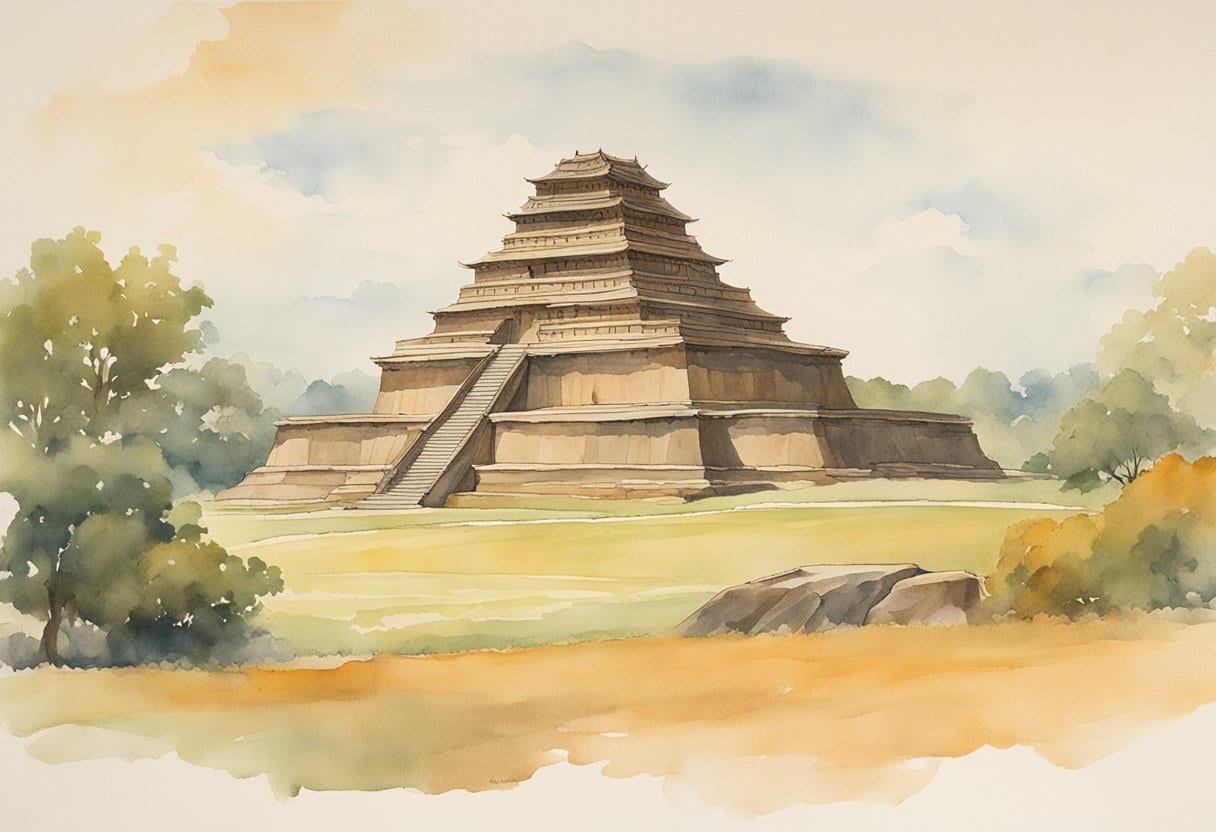
Monks Mound, the largest structure at Cahokia, once supported large wooden buildings on its flat top platform. These temples stood about 50 feet high and were used by the city's leaders for ceremonies and governing.
Archaeological evidence shows that multiple temples were built and rebuilt on top of the mounds over time. The wooden structures had thatched roofs and walls made from posts set into the ground.
The temples were impressive buildings that could be seen from far away. People walking up to Cahokia would have spotted these important structures rising high above the landscape on their elevated platforms.
The wooden buildings didn't survive the centuries since they were made of perishable materials. Only the post holes and other traces in the soil remain for archaeologists to study and learn about their size and layout.
The temples demonstrated the advanced architectural skills of the Cahokian people. They engineered these large wooden structures to stay stable on top of earthen mounds while serving as important centers of ceremonial and political life.
7) Influence of the Middle Mississippian culture
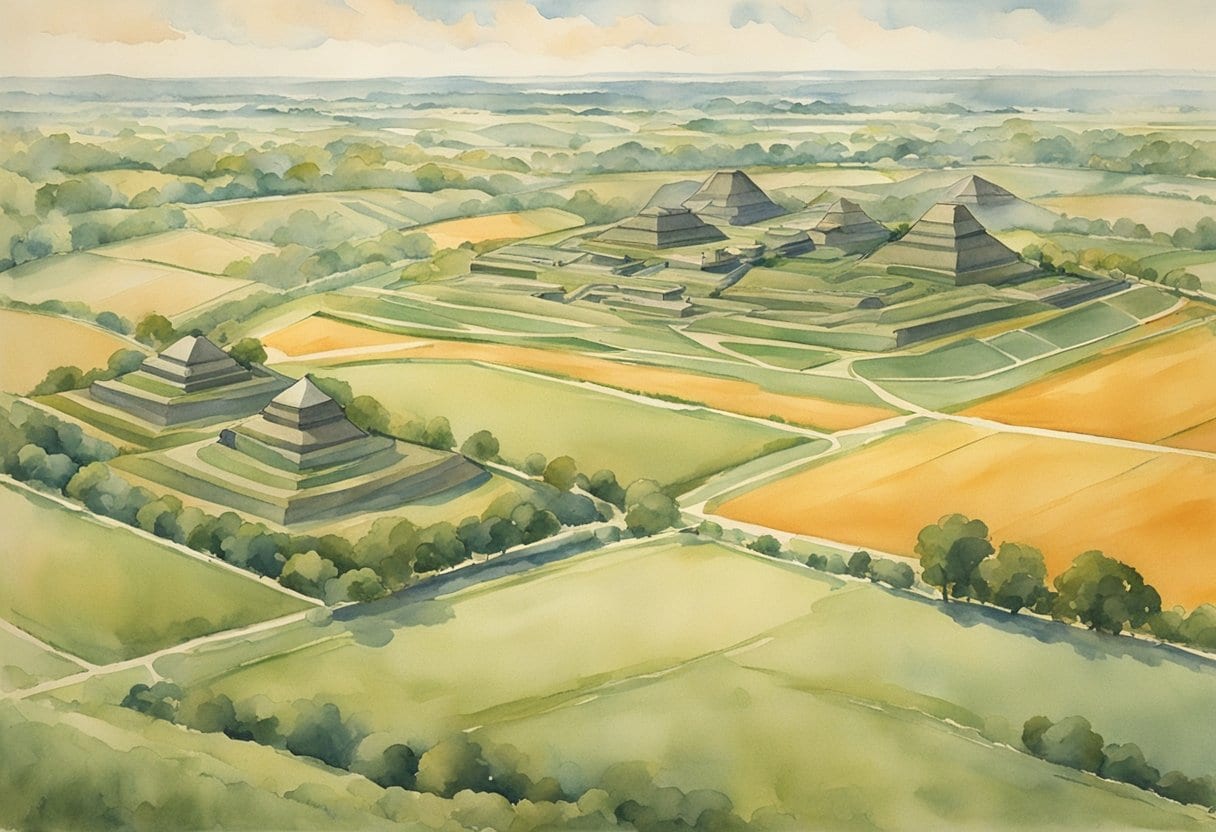
The Mississippian culture spread across a vast area of the Southeast and mid-continent. This included what are now Mississippi, Alabama, Georgia, Arkansas, Missouri, Kentucky, Illinois, Indiana, and Ohio.
Cahokia served as the largest and most influential urban center of the Mississippian culture. Its impact on religious practices and architectural styles reached far beyond its immediate surroundings.
The culture's shift to intensive corn farming around 800 AD marked a major change in how people lived. This agricultural revolution helped support larger populations and more complex societies.
No other city in North America matched Cahokia's size until Philadelphia in the 1800s. The city's massive scale demonstrates the sophistication and organizational abilities of Mississippian society.
The culture's influence can be seen in shared artistic styles, building techniques, and religious practices that spread throughout the region. Their distinctive platform mounds and plaza layouts became standard features in many communities.
8) Advanced urban planning in prehistoric era
The ancient city of Cahokia showcased remarkable urban planning skills. It had carefully designed public spaces and ceremonial areas spread across 3.5 square miles. The layout demonstrated sophisticated thinking about community needs and social organization.
Cahokia rivaled European cities of its time, supporting 20,000 residents through its well-planned infrastructure. The city planners created distinct zones for different activities, from residential areas to gathering spaces.
The Mississippian builders constructed elaborate earthen mounds that served specific purposes within the city plan. Each structure had its place in the larger design, showing advanced understanding of spatial relationships.
The centerpiece of this urban design was Monk's Mound, which served as both a practical and ceremonial focal point. From its summit, leaders could view the entire city and surrounding areas, helping them manage the bustling metropolis.
Trade routes integrated seamlessly into the city plan, connecting different neighborhoods and facilitating commerce. This network helped Cahokia become one of North America's earliest true urban centers.
9) Cahokia's peak population reached 20,000
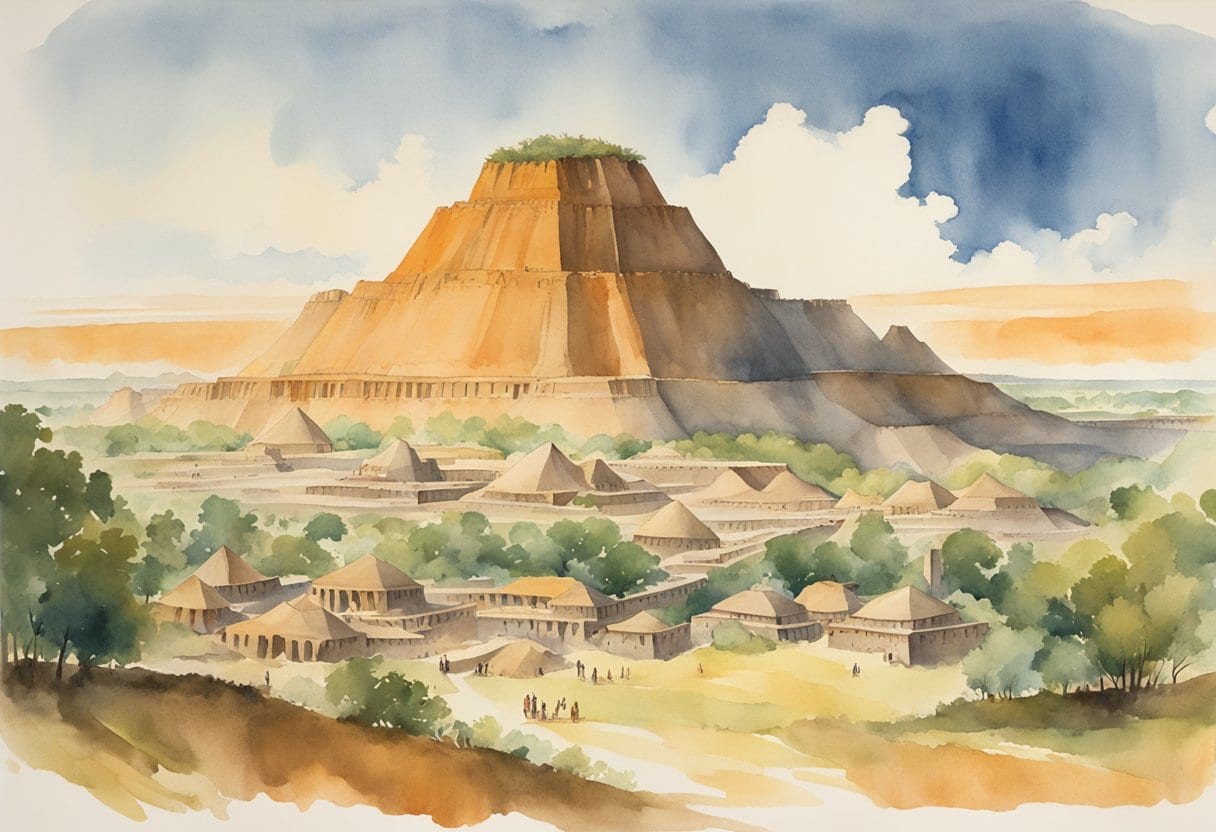
Cahokia's population grew to an impressive 20,000 people around 1100-1150 CE. This made it the largest city in North America north of Mexico during prehistoric times.
The city was bigger than London during this time period. People lived in thatched roof houses spread across the vast settlement area.
The bustling urban center stretched over several miles. Thousands of residents worked as traders, farmers, craftspeople, and builders.
The dense population helped Cahokia become the main hub of the Middle Mississippian culture. People from surrounding regions traveled to trade and gather in the city.
This large population stayed stable for about 200 years. The city started to empty out after 1300 CE, with most people moving away from the area.
10) Over 80 mounds built in Cahokia
The ancient city of Cahokia contained about 120 mounds during its peak around 1100 CE. These earthen structures varied in size and shape, serving different purposes for the prehistoric inhabitants.
Today, about 80 mounds remain preserved within the 2,200-acre archaeological park. The site stretches across 3.5 square miles between East St. Louis and Collinsville, Illinois.
The original settlement covered approximately 6 square miles at its height. The mounds were built gradually over many generations, with people carrying thousands of baskets of soil to create these massive structures.
These mounds stood as impressive monuments across the Mississippi River floodplain. Some served as platforms for important buildings, while others were used for ceremonies or burials.
The mounds remain as a testament to the engineering skills of ancient Native Americans. Their construction required careful planning, coordinated labor, and deep understanding of soil mechanics.
Understanding Cahokia's Historical Significance
Cahokia Mounds stands as the largest pre-Columbian city in North America, representing a remarkable achievement in Native American urban planning and social organization. Its massive earthen structures and complex society changed our view of ancient cultures north of Mexico.
The Rise and Fall of Cahokia
The city emerged around 700 CE and reached its peak between 1050-1150 CE. During this time, the settlement covered 6 square miles and housed up to 20,000 people.
The builders created over 120 earthen mounds. The largest, Monks Mound, rises 100 feet high and covers 14 acres at its base.
Skilled craftspeople made fine pottery, stone tools, and copper ornaments. They traded these items across vast networks stretching from the Great Lakes to the Gulf Coast.
Around 1350 CE, Cahokia declined. Changes in climate, depletion of resources, and political instability likely contributed to its abandonment.
Influence on Native American Cultures
The Mississippian culture that flourished at Cahokia spread its influence across the American Midwest and South.
Their architectural style of platform mounds became a standard feature in many Native American settlements.
The city's trade networks created lasting connections between different groups, spreading ideas and practices across regions.
Religious and cultural practices that developed at Cahokia influenced ceremonies and beliefs throughout the Mississippi River Valley for generations.
Mound Structures of Cahokia
The ancient city of Cahokia featured numerous earthen mounds that served as platforms for important buildings and ceremonies. These massive structures demonstrated advanced engineering skills and social organization.
Monks Mound: The Largest Prehistoric Earthwork
Monks Mound stands as North America's largest prehistoric earthen structure, rising 100 feet high and covering 14 acres. The massive platform mound contains over 25 million cubic feet of soil.
The construction happened in 14 stages between 900 and 1100 CE. Workers carried soil basket by basket to create this enormous structure.
The mound features four distinct terraces with a flat top platform. A large building once stood at its summit, likely serving as a residence for Cahokia's leaders.
Purpose and Function of Mound Structures
At least ten major mounds clustered around Cahokia's city center. These structures formed the heart of this prehistoric metropolis.
The mounds served multiple functions:
- Ceremonial platforms for religious rituals
- Administrative centers where leaders conducted business
- Burial sites for important individuals
- Residential areas for elite members of society
A wooden stockade enclosed the central precinct in the late 1100s, protecting Monks Mound, the Grand Plaza, and 17 other mounds. This defensive wall suggests the need to protect these important structures.
Frequently Asked Questions
Ancient mound structures at Cahokia reveal complex engineering, social hierarchies, and religious practices through careful archaeological study. These earthworks showcase the sophisticated architectural skills of Native American builders who created North America's largest prehistoric city.
What are the key features that distinguish the mound structures at Cahokia?
Monks Mound stands as the largest earthwork in the Americas. It rises in four distinct terraces.
The site spans roughly 6 square miles. It also contains about 80 human-made mounds.
A large central plaza served as a gathering space. It was surrounded by carefully arranged platform mounds.
How did the inhabitants of Cahokia utilize the mound structures?
Elite residents lived atop the flat-topped platform mounds. This set them apart from common citizens.
Religious ceremonies took place on mound summits. Special buildings stood at these summits.
The central plaza hosted games, markets, and community gatherings.
Can you provide an overview of the archaeological significance of Mound 72 at Cahokia?
Mound 72 contained over 250 burials. These included high-status individuals and sacrifice victims.
Exotic materials like copper and marine shells found in the mound point to far-reaching trade networks.
What insights have been gained about the social and political structure of Cahokia through mound excavations?
The size and location of mounds reflect a strict social hierarchy. Elites lived on raised platforms.
Evidence suggests a powerful leadership class controlled labor, resources, and religious practices.
What evidence is there to support the functions of different mound structures within Cahokia?
Remains of buildings on mound summits indicate both residential and ceremonial uses.
Artifacts found within mounds reveal activities like feasting, craft production, and ritual ceremonies.
What are some of the theories about the decline and eventual abandonment of Cahokia?
The city was abandoned around 1350 CE after nearly 300 years of occupation.
Environmental factors like deforestation and flooding may have contributed to its decline.
Political instability and resource depletion likely played important roles in the city's abandonment.
Ready to restore your own photos?
Our artists bring your damaged photos back by hand, most within a few days.
Rated 4.96 out of 5 stars.4.96/5 · Loved by 400,000+ families